SOUTHWOODS MAGAZINE March 2026 PAGE 1

PAGE 2 SOUTHWOODS MAGAZINE March 2026

INDEX

P.O. Box 1106 610 College Hwy, Southwick, MA 01077

Office: (413) 569-0266 Office & FAX: (413) 569-5325

Email: magazine@southwoods.info

www.southwoodsmagazine.com

Southwoods Welcomes Your Comments & Questions

Call (413) 569-0266 or Email Your Suggestions tomagazine@southwoods.info

This Month’s Cover:

Publisher: Carole Caron

Editor: Cole LudorfLayout/Design Artists: Martin Lee, Cole Ludorf

Advertising Consultant:

Carole Caron, Martin Lee

Memories By Bernadette Gentry ....................................3

March 1962 By Clifton J. (Jerry) Noble Sr .......................4

Where Have All the Dairies Gone By Jim Putnam II. ..8

One Powerful Question By Dr. Simone Phillips..........10

Guardian of the Stones: Gene Theroux By Todd Shiveley ...................................................................11

Keep Walking By Michael Dubilo. ................................14

Maplewood Dream By Pennie H. Sibley ........................16

The Divide: Why Granby and East Granby areTwo Towns By Dave Roberts ...............................................17

Friend to Friend By Jeff King. ......................................20

Bulletin Board ...........................................................22

Classifieds ..................................................................23

Digital Art by Southwoods

STORIES!

LISTEN

to

our

SOUTHWOODS MAGAZINE March 2026 PAGE 3

By Bernadette Gentry

Today,if an umbrella turns inside out and breaks, we would probably get a new one. When I was a Little girl in Port Chester, New York, on Main Street, there was an “umbrella man” who had a little cart on the sidewalk and, for a small charge,would repair the umbrella. (We didn’t have the money to buy a new one.)

Also, on Main Street, was a shoe repair store where shoes could be re-soled or re-heated--much cheaper than buying new shoes.

In those days,we walked to school. Also,we walked home for Lunch and walked back to school--all within a one-hour Lunch period.

A Sunday afternoon drive after church and a big family lunch were typical events.

I remember selling garden seeds and another time greet-ing cards to earn money. Most of the neighbors bought them. I think they felt sorry for me out there in the summer heat.

These are a few memories. Maybe I’ll write some more an-other time.

Memories

00:00/ 00:00

PAGE 4 SOUTHWOODS MAGAZINE March 2026

blizzard of ’88. Uncle Ralph Em-erson arrived. Baby got used to him and we played in liv-ing room with records till 2:30. I did laundry 5 to 6:30 p.m.

March 4, Sunday I picked up last week’s paper along with to-day’s in Russell. Mrs. Brennan, new assis-tant matron opened door at SGH. As or-ganist I wore choir robe over white shirt and dunga-rees. Sherill Jour-dan learned solo in eight minutes. Of last Sunday she said Mrs. Bardsley’s playing was different from mine to sing with. Dotty Barnes invited Elizabeth and I sliding on the crust on cardboard downhill by schoolhouse.

March 5, Monday. I delivered most time sheets. I wore gambler-striped pants from Fred Mueller in Denver, and Al Graziano asked where I got them.

March 6, Tuesday. State car trouble seems to be with Bendix spring. Baby headed for record player after supper so played music for him.

March 7, Wednesday. Water in our ten-foot well is 5 ft. 4 inches deep. Went out on skis from six till dark

March 8, Thursday. Baby fell out of bouncing chair. He weighs 19 lbs, 8 ounces. Elizabeth thought white on roof of ba-by’s mouth might have been thrush, but it went away so it must have been paper he is fond of eating.

March 9, Friday. Played records for baby. Danced for him and with him on my shoulder. While Elizabeth phoned her mother he pulled himself up by front of record player and stood about three seconds without holding on to anything.

March 10, Saturday. I took Hester to Southampton to see cousin Lester since he is out of hospital. He was in cellar repair-ing mother-in-law Beech’s vacuum cleaner. Wind had sucked down chimney and lifted damper off frame so Mabel got in fireplace and lifted it back. After dinner I went out in sun on skis. Out of sight of houses I took off shirt and got some tan. State police told Ralph Sheldon he can’t open laundry on Sun-day without a permit from selectmen.

March 11, Sunday. 62 degrees in sun. Hester went with me

By Clifton Jerry Noble, Sr.

March 1, Thursday. I made the rounds to pick up time sheets, and had the row-boat returned from Westfield River in West Springfield to Locust Street in Northampton. Jim Geagan told me that Bob Fontaine is on WWLP TV tonight’s Colton show with his oil paintings. Bob’s father worked for DPW on the first piece of Route 57 west from South End Bridge in Agawam built by Golden & O’Brien. Rumor hath it that temporary Frank Weiss is to be replaced as Traffic Engi-neer by someone permanent. I had to wait for dryers at laundry. Owner Ralph Sheldon told me building will be unlocked so it will be all right for me to come early Sunday.

March 2, Friday. I stopped at noon at Sarah Gillett Home to see my mother, Hester. She has a toothache. I didn’t have a chance to get pop corn for her but did get peppermint.

March 3. Saturday. I got up at 6:30 and took bath. Baby Jerry says “Daddy” very nicely. Uncle Sam Boyce saw in the pa-per that I had been sick and telephoned to ask about it. Born in 1883 he remembers climbing out a second story window in the

Dancing

with Baby

on my

shoulder

MARCH 1962

March 2015

00:00/ 02:04

SOUTHWOODS MAGAZINE March 2026 PAGE 5

to church. Anthem went well although Dr. Teale almost omitted it. After dinner I played records for baby and danced for him. About 3:15 I carried him over to the top of Shanty Hill and back

March 12, Monday. SNOW. A tractor trailer couldn’t get up Westfield’s Clay Hill and tied up traffic, but I got to Greenfield in 69 minutes by 8:44. Frank Brown, back from Florida vacation saw the Glen rocket go up from 60 miles away. Went through downpour to Springfield. Cloutier was smoking a pipe with Cherry Blend. This was the first smoke that ever smelled good to me. Water in our well is 6 ft. 1 in deep.

March 13. Tuesday. While shaving I heard water spraying in cellar. Rubber connection between pump and tank had failed. Connection from well also failed. Turned off pump. I also had to disconnect well pipe to prevent siphon from sucking well water into cellar. It took from 8:30 to 2:10 to find and buy parts to fix damage. Mr. Barnes came to help, and I gave him $5.

March 15, Thursday. I visited Hester ar SGH while having S216 lubricated. She is still selling decorated writing paper. She has disovered that Miss Edith Robbins’ haughty treatment of her is peculiar to Miss Robbins and not typical of the other old ladies.

March 17, Saturday. I got to laundry by 6:50, but 73-year-old Hazel Griffin was ahead of me. She is radio operator for Springfield Gas Light and knows surveyor Art Smith who was Cowardly Lion when I was Tin Man in Wizard off Oz redcital. She graduated from Sringfield Technical High School in 1910 and started training at Noble Hospital April 1926. She started with Gas Company in 1927, and has lived in Russell about 35 years.

March 21, Wednesday. I took our own Ford to Sarats for body work and walked a mile to the field office trailer.

March 22. Thursday. This afternoon I had two flats on S216’s right front wheel. Stopped to see Hester. She visited Un-

cle Ralph yesterday and got a real welcome. Tomorrow is open house at SGH for Mrs. Packard who will be 100. God guided me to go to Post Office. E’s skirt and my shirts and belts were there from Fred Mueller in Denver.

March 23, Friday. S216 got stuck in soft shoulder of new road in Holyoke, but Holyoke Light and Power truck kindly had me hauled out in ten minutes.

March 24, Saturday. I am 36 today. Noon to 3 p.m.I was out in sun in yellow briefs to get more tan. At-waters brought suits from E’s brother Shi-pley all beautifully cleaned, pressed and packed. We had a fashion show.

March 25, Sunday. I wore blue suit from Shipley, and many remarked how nice it looked. After church the congregation vot-ed “Yes” on minister and Mrs. Shears request for dismissal from membership.

March 26, Monday. No time sheets in to de-liver.

March 27, Tuesday. I took our Ford to Sarats and walked to the job. At noon I walked to Grants and bank and back to trailer office, 3 miles altogether. When car was done Sarats had replaced both rocker panels, both rear quarter panels, painted fenders, and straightened bumper—20 hours for $60. Baby is adept at creeping and pretty good at climbing.

March 28, Wednesday. Ed Blake escaped with scratched cheek when furnace blew up while he was trying to start it after power failure in night. E left baby in carriage to get coat. He fell out scratching forehead. She put on ice and Witch Hazel and called her mother. They were more shook up than baby.

March 30, Friday. In afternoon E’s folks brought a very nice stroller for baby. He tumbled down again, this time in bathroom, and scared E. Well water is 8 feet 2 inches deep.

March 31, Saturday. On way home from laundry I saw landslide at town line. Phone was out but fixed by noon. Rode baby around house in stroller. Read Vicki Baum’s Theme for Ballet.

PAGE 6 SOUTHWOODS MAGAZINE March 2026

SOUTHWOODS MAGAZINE March 2026 PAGE 7

PAGE 8 SOUTHWOODS MAGAZINE March 2026

After a recent talk at a Southwick Historical Society meeting, someone asked me, “What hap-pened to Southwick’s dairy farms?” It was cook-ies-and-punch time, hardly the moment for a topic that deserved more than a quick exchange between bites. The question lingered with me, and I soon realized it belonged in the pages of Southwoods as part of our town’s rich farming story.

I estimate that Southwick was home to about 40 working dairies during the 1900s, though not all operated at the same time. These farms and their herds are long gone, but anyone who grew up in Southwick after World War II can still re-call the families, the locations, and perhaps even memories of working on a dairy farm. A few distinctive farm buildings remain as beloved re-minders of our dairy past. Many of these former farms were on Hillside Road, Coes Hill Road,

South Loomis Street, Granville Road, the Ranch on Sunny-side, and, of course, the property now known as Westfield River Brewing on College Highway. Others exist only as ghosts in my memory.

This story is mostly a fond remembrance, with a touch of “who done it.” In the last issue of Southwoods, we explored how the last glacier shaped Southwick’s farmland. Now we begin with the first European settlement and follow the thread through the late 1900s, when the last dairy barn lights went dark.

Settlers arrived in the early 1700s, later than in the Connecticut Valley towns to our east. They practiced subsistence farming, growing food and fiber to sustain their families and hope-fully producing enough surplus to trade or sell for other goods, pay taxes, and meet obligations. They brought livestock—sheep, cattle, hogs, and horses—and immediately set about clearing land for pasture and small fields. Trees were cut to encourage grass growth and to make way for hay production. Stones were removed and piled along property lines, forming the familiar stone walls still found in the woods of western South-wick.

Throughout the 1700s and 1800s, most fami-lies kept small herds of multipurpose cattle. Cows were milked after calving, providing fresh milk, butter, and homemade cheese. A bull was kept on the farm or nearby for breeding. Other young bulls were castrat-ed and trained as oxen, the draft animals of the day. Surplus

Part 1

Sunnyside Ranch started as horse farm

Dairy Cow on Pasture

00:00/ 02:04

By Jim Putnam II

SOUTHWOODS MAGAZINE March 2026 PAGE 9

cattle could be butchered for beef, usually salted before the era of refrigeration. Extra animals, butter, or salted beef could be bartered or sold, a welcome boost for farm families. Sheep were also raised for wool and meat, especially in the early 1800s. As more land was cleared, small fields produced hay, field corn, small grains, outdoor to-bacco, fruit, and vegetables.

The late 1800s brought hard times for New England farmers. They could not compete with the rapidly expanding agriculture of the Midwest, where grain, butter, cheese, beef, and pork could be pro-duced more efficiently and shipped east by rail at lower cost. Many young people left for growing cities or moved west in search of better opportunities. Much of Southwick’s less productive farmland was abandoned and slowly returned to brush and forest. Today, a walk in the woods often reveals old stone walls, barbed wire, and other relics of once-cleared fields.

Outdoor tobacco had long been grown in the region for home use and for cash, and it remained a mainstay for many Southwick farms during this era. Markets rose and fell as con-sumer preferences changed, but local cigar makers such as Charles Gillett provided steady demand for quality leaf. In the late 1800s, surplus hay and horses became important cash crops. Before automobiles, industrial cities like Springfield, Holyoke, Chicopee, and Hartford needed horses and hay, and the west side of Southwick was ideal for grazing and hay production.

Meanwhile, the sale of unpasteurized milk in cities was a hazardous business. Milk was delivered from open barrels by horse-drawn peddlers, often already spoiled and responsible for outbreaks of tuberculosis, brucellosis, salmonella, and lis-teria. In the final decade of the 1800s, a series of innovations transformed the fluid milk industry and made dairy farming an attractive opportunity for Southwick farmers. In 1892, the certi-fied milk movement began in New Jersey, and Massachusetts soon followed. Sanitary standards were established for produc-ing and bottling milk, and farms had to be inspected and certi-fied. Around the same time, a test was introduced to identify cows with Bangs disease, the bovine form of brucellosis, and infected animals had to be culled. Pasteurization, perfected in

1857, became commercially viable in 1895, allowing milk to be bottled, refrigerated, and sold safely to a much larger market.

The exact moment when South-wick farmers began producing milk for bottling is unknown, but it was likely before 1920, perhaps supply-ing raw milk to one of Westfield’s early bottling plants. The rise of the automobile and improved roads made it easier to transport milk to market. In 1920, Charles Nutter opened Pioneer Dairy at the corner of Feeding Hills and North Longyard Roads, giving Southwick farmers a nearby, year-round buyer they knew and trusted.

The timing was fortunate. The west side of town had long produced hay and horses, but after World War I, that market collapsed as internal combustion engines replaced horsepower. Those same pastures and hayfields, however, were perfect for dairy cows. New barns were built with ground-level stables and upper-level hay mows. Fences were rearranged so cows could be brought in twice a day for milking. Many farms added wood-en stave silos to store chopped corn for winter feed.

The 1920s and 30s were difficult years for most American farmers, but for Southwick’s dairy farms, the monthly milk check must have been a welcome addition to a modest income. Still, families were limited by how many cows they could hand milk twice a day, every day of the year. Electric milking ma-chines existed by the early 1920s but were impractical until electric lines reached rural areas, and even then, many families could not afford the equipment or the larger barns needed for more cows. The U.S. Department of Agriculture reported that in 1936, only 14 percent of Northeast dairy farms used milking machines.

During these hard years, many farms changed hands as old-er families sold out or lost their land to foreclosure. This opened the door for newer arrivals, often of Polish descent, to pursue their dream of farm ownership. With larger families, they had more hands to milk cows, put up hay, grow tobacco, and man-age the many chores that kept a dairy farm running.

Raking hay in the era before tractors

PAGE 10 SOUTHWOODS MAGAZINE March 2026

There is a question I often encourage parents to ask espe-cially in the middle of frustration. It is simple, powerful, and capable of completely shifting the tone in your home. Instead of asking, “Why is my child acting like this?” try asking, “What skill is missing right now?” That one question changes everything.

When we ask why in moments of stress, our brains often search for blame. We start thinking they’re being lazy, they’re being disrespectful, they’re trying to push our buttons, or they should know better. Those interpretations raise our stress level, and when our stress rises, our response becomes sharper, louder, and more reactive. But behavior is rarely about character. It is usually about capacity.

Children do not wake up in the morning planning to struggle. When behavior becomes loud, resistant, avoidant, or emotional, it is often communicating something underneath. It may be saying that something feels too hard. It may be saying they don’t know where to start. It may be saying they feel overwhelmed, anxious, or embarrassed. It may be saying they don’t have the words for what they’re experiencing. If we respond only to the surface be-havior, we miss the message underneath.

When you begin asking, “What skill is missing?” you start to see patterns. A child who melts down when it’s time to leave the park may struggle with transition flexibility. A child who slams doors but insists they’re “fine” may lack the language to express frustration or disappointment. The child who avoids homework for 45 minutes may not be defiant getting started may simply feel overwhelming. The child who quits quickly when something is hard may need support building frustration tolerance. The child who refuses a birthday invitation may be struggling with anxiety and uncertainty. When we identify the skill gap, we shift from punishment to teaching.

This question moves us from “I need to stop this behavior” to “I need to teach this skill.” That shift is subtle but powerful. In-stead of escalating, you might say that getting started looks hard and you can break it into two small steps. You might acknowledge that leaving is tough and offer a five-minute warning next time. You might notice their body looks tight and gently ask if they are frustrated. In doing so, you build capacity instead of battling be-havior.

Parents often ask whether this means there are no consequenc-es. Not at all. Structure still matters. Boundaries still matter. If a child throws a toy, the toy may be removed. But later, we teach by asking, “What can your hands do when you’re frustrated?” Cor-rection without instruction leads to repetition. Correction with instruction leads to growth.

The next time you feel your frustration rising, pause and si-lently ask yourself what skill is missing right now. Notice what shifts inside you. Curiosity softens tone. Understanding reduces urgency. Calm creates space for problem-solving. And your child feels the difference.

When children grow up in homes where behavior is treated as communication, they learn something profound: struggling does not mean they are bad it means they are learning. Over time, they begin asking themselves the same question: “What skill do I need right now?” That is how emotional resilience is built. Not through perfection, but through patient teaching.

One Powerful Question

Dr Simone Phillips, Psychologist

Inside the Young Mind:

00:00/ 02:04

SOUTHWOODS MAGAZINE March 2026 PAGE 11

By Todd Shiveley

“Not an old time drunken sexton merely digging holes for bodies. Instead almost a dentist who scrapes away the rot and decay from the stone inscriptions in sad dismay. And whose joyous work is to brush, repair, glue, and clean, making them shiny, white, and glistening against the sun. Like a new mouth inviting everyone.” - Todd Shiveley

Over the years, while serving on the Historical Commission and attending town meetings, I would of-ten see Gene Theroux and gradually come to know him. He spoke warmly of my late father; they had both served in the Air Force at Barnes, and my father was active in the Southwick VFW. I also knew Gene was deeply involved in cemetery preser-vation. Still, about two years ago, when the towering trees in the old cemetery were cut down and the entire landscape changed, I reacted too quickly online, call-ing it a tragedy and lamenting the loss of beauty.

The next day, I went to the cemetery to take pictures, some-thing I’ve done for more than thirty-five years. Gene happened to be there, and we began talking. Our conversation started with a slight disagreement, entirely due to my own misunder-standing. He showed me the damage caused by the Norwegian maples and especially the spruces and pines, whose sap stained and weakened the gravestones. Their heavy shade encouraged the growth of microorganisms and lichens that slowly con-sumed the stone faces, sometimes peeling them apart complete-ly. I realized that all I had cared about was the scenic beauty of the shade and the memories of my younger years, when I walked there at night, half hoping to glimpse a ghost.

Over the last two years, my respect for Gene has grown immensely, and I felt compelled to write about his dedication and the quiet, steady work he has carried out for nearly a de-cade. Originally from West Springfield, he moved to Southwick

in 1991. After retiring from the Air Force eighteen years ago, he became active on town boards and commit-ted himself to being a fully engaged citizen. About nine years ago, in 2017, he began learning gravestone preservation through hands-on vol-unteer work, online workshops, and extensive reading. His knowledge grew to the point where he could teach others, and he eventually served as chairman of the Cemetery Commission and as a member of the Community Preservation Commit-tee.

Around seven years ago, he ap-plied for a grant to purchase the proper solutions for gravestone repair and to remove a few trees. Because the grant could not exceed $10,000, he had to wait for the town to approve a larger amount to remove the many large trees surrounding the old cemetery, which was eventually accomplished through a grant with Eastern Massachusetts Tree Removal Co.

Other preservation efforts also re-quire significant funding, including the metallic and bronze flag holders for vet-erans of the Revolutionary War, Civil War, War of 1812, and other conflicts, which can cost $200 each. In connection with veterans’ history, retired town vet-erans who own property can assist for up to 100 hours with gravestone preservation and receive $1,500 tax refunds for their work. Gene’s efforts extend beyond South-wick as well; he also helps in Westfield cemeteries, including Pine Hill on Route 20.

We are fortunate to have someone like Gene Theroux, a true conservation and preservation specialist, working to save our stones and safeguard our history.

Guarding the Stones:

Gene Theroux’s............Quiet Legacy

00:00/ 02:04

PAGE 12 SOUTHWOODS MAGAZINE March 2026

SOUTHWOODS MAGAZINE March 2026 PAGE 13

PAGE 14 SOUTHWOODS MAGAZINE March 2026

Walking itself is more than movement, it is a quiet reminder that life asks us to keep going, step by step, even when the path ahead is uncertain. Even those individuals who are not given this privilege, keep moving forward so be willing to help others when the opportunity arises. We can embrace walking as a symbol of moving forward with courage and hope.

Think of little Mikey, no longer crawling but sud-denly up and walking. His big sister stays close for support while Mom and Dad gleam with joy. Re-member that special moment when a child takes their first steps and the excitement of calling grand-parents to share the news. Mikey’s eyes are wide with the promise of new adventures, moving with childlike confidence. With each wobble and fall,

he gets back up without tears and keeps going. His parents praise him not only for walking but for his determination to rise again. In his tiny steps, we see a blueprint for life: explore, think, choose the right path, and keep moving forward.

Walking has always been the steady pace of peo-ple across the world. Scripture tells us that Noah and Enoch walked faithfully with God, reminding us that walking is an act of trust. We may wobble left or right, but keeping our eyes on the goal helps us move forward with purpose. Imagine peaceful walks among trees heavy with fruit, and when your walk is done, enjoy the nourishment they offer.

Walking also teaches us how to strengthen our-selves. Dr. Rhonda Patrick, a biomedi-cal scientist specializing in healthy ag-ing, promotes engaging in ten minutes of strength or high-intensity exercise. Walking supports cardio-respiratory fitness, glucose regulation, and longev-ity. Stretch before activity, and always exercise according to your abilities. As your fitness improves, expand the in-tensity of your chosen activity. Stay hy-drated and cool down with a slow walk. Fresh, oxygenated blood flows to the mus-cles like good food nourishing the body. Each step becomes a small investment in your future strength.

Yet walking is not always easy. Walk-ing on ice, for example, can be dangerous, and sometimes it is unavoidable. Iowa State University sug-gests short steps or a shuffle for stability. Shifting your center of gravity so your feet stay perpendicular to the ground helps maintain balance. Leaning slightly forward and allowing a gen-tle side-to-side motion keeps your feet flatter. If you feel like a penguin, you are likely doing it correctly. Even here, walk-ing teaches us something: when conditions are slippery, slow down, adjust, and keep going with care.

Even if we fall it is important to understand how to fall safe-ly. ISU advises bending your back and head forward to avoid

Keep

Walking

00:00/ 02:04

By Michael Dubilo

SOUTHWOODS MAGAZINE March 2026 PAGE 15

striking your head. Tucking your chin helps lower and protect it. Rolling into a fall absorbs energy, and keeping your arms and legs bent allows for a smoother landing. Paying attention to speed, footing, and surroundings builds confidence, and prac-ticing these skills helps you become more adept at managing falls. Even in falling, we learn how to rise.

My wife Susanna, who is living with Parkinson’s disease, embodies this spirit of forward motion. She walks around our home for 20 minutes with a mindset of “my priority needs.” Guided by the coaching of her husband, Mike with the sup-port of a walker, upbeat music, and constant encouragement, she moves with determination. When she changes direction or walks backward, Mike holds her hands. If she looks down, she freezes, but when she looks at him, she moves easily. This practice promotes balance and mind-body coordination. Their shared walk is a testament to perseverance and the belief that progress is still possible, even when the path is difficult.

Life is filled with uncertainty, so embrace each day as it comes. The wind blows in ways we cannot predict, yet life is short, so rise with joy and stay involved rather than becoming paralyzed by fear. Susanna and I encourage you to walk the path set before you. Your journey has purpose, so meet each challenge and overcome the obstacles in your way.

In closing, consider young Mikey’s example and carry that vision with you. Be adventurous, take careful and calculated risks, and if you fall, rise without complaint and move forward with determination. You have a talent—do not bury it. Invest in it, nurture it, and let it grow as you continue your walk through life

PAGE 16 SOUTHWOODS MAGAZINE March 2026

I was born in Otis at the Maplewood Inn, the great-grand-daughter of Mr. and Mrs. George Barton. Shortly after, my fami-ly moved to Lee, which felt like “the big city.” I grew straight and strong, as all Otis girls do. Sunday was my favorite day. We would go to church and then pile into the car to visit Grandma Bar-ton, known as Mother Fannie to those who knew her well. My mother had grown up in the Maplewood, so she was going home. I was going to see Grandpa.

I loved his six-foot, seven-ty-year-old frame, his white hair, and his gruff ways. He fascinated me, and I think he knew it. One snowy March day, Grandpa was in the mood for a visit from an adoring eight-year-old. He took me out to bring salt lick to his sheep. When we reached the field next to the inn, there were no sheep to be found, only big gray rocks.

“Where are they, Grandpa? How will we get them to come here?” I asked.

He was a man of few words. Suddenly he bellowed, “Home, Babe!” First I heard thundering hooves coming near-er. Then, over the hill, ran what seemed like a hundred sheep, though it was more like twenty-five. Babe was the name of the lead sheep Grandpa had trained as a pet, and the rest were fol-lowers. They ran straight to him. I hid behind him for safety, convinced he was some kind of deity. A man who controlled

animals left me speechless and awed. Some of the sheep had great big bellies, and when I asked about them, he simply said they were full of lamb.

“When will they come?” I asked. “Some too soon,” he answered. “New England winters make them lamb early, and their lambs die in the cold. The mothers don’t take care of them if they’re born that way.”

Grandpa could solve anything. In the early days of March, even in the middle of the night, he patrolled the fields to collect the tiny, helpless lambs born too soon. The story thrilled me. When we entered Grandma Barton’s warm kitch-en, I saw five new lambs tucked under her large black wood stove. Grandpa had fenced them in to keep them warm, though Grandma was less than thrilled. There they were, touchable and eager to see me—just me. I reached out to feel their nappy heads and lean bodies.

Grandpa handed me a glass baby bottle filled with warm milk and pushed it through the loose wire fence. I held on tight as the lambs pulled so hard on the nipple that I was nearly dragged forward. Not a drop was wasted. Milk rolled from the lips of one lamb to the nose of another. I was feeding babies born outside only two days before, and it felt like a miracle. In that moment, Grandpa Barton rose another notch in my heart and created one of many Maplewood dreams.

By Pennie H Sibley

00:00/ 02:04

SOUTHWOODS MAGAZINE March 2026 PAGE 17

To visitors and even to some longtime residents, it can seem puzzling that Granby and East Granby, two neigh-boring towns with shared roots and close ties, exist as separate municipalities. The answer lies in early colonial settlement pat-terns, geography, and the practical realities of life in 17th- and 18th-century Connecti-cut. The story begins in the mid-1600s, when the area that would eventually become both towns was part of the much larger com-munity of Simsbury. English settlers were drawn to the region by fertile farmland, plentiful water, and the convenience of river and Native Ameri-can trail routes. They established farms and small clusters of homes spread across a wide geographic area, and as Simsbury grew, its outlying sections became increasingly distant from the town center. Travel was slow and difficult, especially in winter or during periods of flooding, and attending town meetings, church services, or conducting civic business could require hours of travel.

By the early 1700s, residents in northern Simsbury sought greater local control and convenience. In 1786, this northern parish, sometimes called Salmon Brook, officially separated to become the town of Granby. The new town was named after Granby, Massachusetts, reflecting the New England tradition of borrowing familiar place names. Granby developed around agriculture, mills, and small industries, with villages forming near waterways such as Salmon Brook. Its identity was shaped by farming families, local churches, the Grange, and community institutions that supported a largely rural population.

The area now known as East Granby followed a somewhat different path. Originally called Turkey Hills, the settlement developed east of the Metacomet Ridge, a natural barrier that significantly affected travel and communication. While Granby

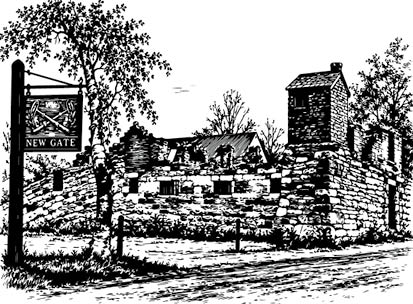
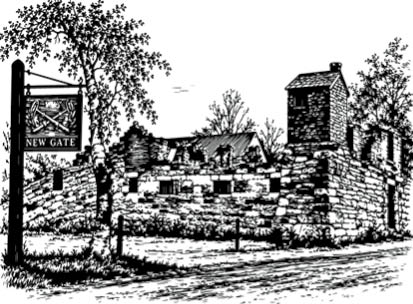
and East Granby shared common origins, the ridge made regu-lar interaction more difficult than their proximity might suggest today. In 1858, Turkey Hills separated from Granby and was incorporated as the town of East Granby. By that time, the com-munity had developed distinct economic and social character-istics, including agriculture, manufacturing, and the presence of New-Gate Prison, the nation’s first state prison, which also operated as a copper mine. These factors contributed to a strong local identity and the desire for independent governance.

The separation of Granby and East Granby was not the re-sult of rivalry but of practicality. Colonial-era towns needed to function efficiently, and smaller, more localized governments better served residents’ daily needs. Geography, especially hills, ridges, and rivers, played a major role in shaping town bound-aries. Over time, each town developed its own civic institutions, traditions, and sense of place, yet their shared history remains evident in family names, his-toric buildings, and the landscape itself.

Today, Granby and East Granby are distinct towns with their own governments, schools, and community orga-nizations, but they remain closely connected. Residents often work, shop, and participate in cultural and historical activities across town lines, and organizations such as historical societies help preserve and interpret the stories that bind the two com-munities together. Understanding why Granby and East Gran-by are separate towns offers a glimpse into how early Connecti-cut settlers adapted to their environment and organized their communities. It also reminds us that today’s town lines reflect centuries of history shaped by geography, necessity, and local identity—not division, but evolution.

By Dave Roberts

00:00/ 02:04

PAGE 18 SOUTHWOODS MAGAZINE March 2026

SOUTHWOODS MAGAZINE March 2026 PAGE 19

PAGE 20 SOUTHWOODS MAGAZINE March 2026

10-5

Every morning when you get out of bed, I want you to look in the mirror and say: “I have what it takes!”

Each of us has an internal dialogue, an inner conversation going on with ourselves throughout the day. In fact, we talk more to ourselves than we do anybody else. The question is: What do you say to yourself? What do you focus on? Posi-tive thoughts? Empowering thoughts? Affirming thoughts? Or do you go around thinking defeated thoughts, telling yourself, “I’ve got bad luck. Nothing good ever happens to me.”

We usually talk to ourselves subconsciously. We see some-body who’s successful and that inner voice tells us, “That will never happen to me.” Or we see somebody who’s healthy and fit. That voice tells us, “I’m not that disciplined. I’ll never get

back in shape.”

We have to reprogram our mind. Don’t lie in bed every morning, thinking about everything that’s wrong with you. Don’t lie there and rehearse all your mistakes thinking about what you can’t do or how you don’t have what it takes. Put on a new recording.

Remind yourself: “I am a child of God. I am blessed. I am talented; I am creative; I have a bright future. I can do what God has called me to do. I have what it takes.”

It’s time to become your own best friend!

Next, you have to look in the mirror and say, “I know who I am!

I heard about a young couple named Paul and Jennifer. They have a little boy named Jackson. Every night when Jenni-fer puts Jackson to bed, she tells him a story and prays with him.

Just before she says good night, she says, “Now, Jackson, let me remind you who you are.” Then she goes through a long list of superheroes. “Jackson, you’re my Superman. You’re my Power Ranger. You’re my Buzz Lightyear. You’re my cowboy, my police officer, and my knight in shining armor.” Little Jack-son just lies there with a big smile on his face, taking it all in.

What is Jennifer doing? She’s giving Jackson fuel for his in-ternal dialogue. Even though he’s only 3 years old, Jennifer is saying to him, “Jackson, I know who you are you’ve got what it takes; you are going to do great things in life.”

Something funny happened the other day. Jennifer got home late, so she put Jackson to bed in a hurry. She didn’t take time to go through the long list of superheroes. A few min-utes later, she heard this little voice calling out from upstairs. “Mommy, mommy.” Jennifer ran to the staircase and called, “Yes, Jackson, what’s wrong?” He said, “Mommy, you forgot to tell me who I am.”

There’s a deeper truth there. If we don’t tell our children who they are, somebody else will. I want to tell my children and grandchildren and all the children of this church “You’ve got what it takes. I’m proud of you. I believe in you. You’re going to do great things.”

Maybe some of you are like Moses The Bible says that Moses never had a close relationship with his father. He didn’t have that important person speaking encouragement into his life. So, when God came to him and said, “Moses, I want you to lead the people of Israel,” not surprisingly, the first words out of Moses’ mouth were, “God, who am I?” God said, “Moses, don’t say, ‘Who am I?’ You’re the one I’ve chosen.”

Moses lacked confidence. He didn’t get a lot of encourage-ment growing up. But, with God’s help, he overcame that defi-cit and so can you. Maybe you didn’t get a lot of encourage-

Have

Confidence

00:00/ 02:04

SOUTHWOODS MAGAZINE March 2026 PAGE 21

ment as a child. Maybe your earthly father never told you who you are. But allow me to help you out ...

You are a child of the Most High God.

You are crowned with God’s glory and honor.

You can do all things through Christ.

You are overflowing with potential.

You have courage, strength, and ability.

The favor of God surrounds you wherever you go.

You are blessed and you cannot be cursed.

You are a victor, not a victim.

You have been chosen by God Himself.

That’s who you really are. So, throw back your shoulders, hold your head up high, and start telling yourself: “I know who I am!” Because

The only thing that stands between you and what you want from life is often merely the will to try it and the faith to believe it’s possible.

Get your thoughts moving in the right direc-tion. Perhaps you’re thinking, Jeff, you don’t know the problems I’m facing. Well, maybe you need a new perspective on those problems.

I read about this crazy study done with a group of college students. Here’s what happened: They gave the students some special eyeglasses that turned everything upside down, totally opposite of what it should be. For the first few days of the ex-periment, they couldn’t read or write, they had to be led to class, and they could barely function. But slowly, they started adjust-ing. After a week, they were able to go to class on their own. They didn’t need help to get around. After a month, the stu-dents had totally adapted. Upside down seemed normal. Their minds had compensated for their upside-down world, and they could read without any problem. They could write, do their homework, type on the computer all upside down.

Something similar can happen to us. If we go around with the wrong mind-set long enough, telling ourselves, “Nothing good ever happens to me,” just like those college students, even though it’s totally upside down, our minds will eventu-ally adapt and adjust, and we will end up living at that level. Your world may be upside-down already. If your internal sub-conscious dialogue is negative, you have to change that before anything else will change.

I read about a woman who lost 175 pounds. She had sur-gery to remove the excess skin and everything went great. They showed the before and after pictures, and she looked fantastic. But several months later they went back to interview her, and

she was depressed. They said, “Hey, what’s wrong? You look great. You look fantastic.”

She said, “Yes, that’s what everybody is telling me. But I guess in my mind, I’ll always be that unhealthy and unattractive person.”

As I read that, I thought, You hit the nail right on the head. You said, “But I guess in my mind…” It’s in your mind. She had changed on the outside, but she had not changed on the inside. She was still playing that old negative record-ing. “I’m ugly. I’m unhealthy. I’m unattractive. I’ll never be happy.” She could be at her ideal weight, and she still wouldn’t be happy. Don’t listen to voices that are pulling you down. Don’t accept those statements about yourself. You have to rise up and start talking to yourself in a new way. All through the day, you should be telling yourself, “Something good is going to happen to me. God is pleased with me. I am a blessed person. I have a bright future. The best is yet to come. Ev-erything’s going my way.”

You have to change on the inside before it’s ever going to change on the outside.

My friend, it’s time to become your own best friend. Have confidence in yourself. Remind yourself every day: “I know who I am. I have what it takes. I am smarter and more prepared than I have ever been in my life.” God believes in you now you need to believe in yourself.

PAGE 22 SOUTHWOODS MAGAZINE March 2026

To include your event, please send information by the 1st of the month. We will print as many listings as space allows. Our usual publication date is around the 10th of the month. Email to: magazine@southwoods.info.

Southwick Lions ClubAntiques Appraisal

Have you wanted the opportunity to learn more about your family heirlooms and collectibles? Join us during an Antique Appraisal Day, to be held Sunday, April 12th from 10-2 at the Southwick Senior Center, 454 College Highway, Southwick. Professional appraisers will be available to provide evaluations on a wide range of items, including furniture, jewelry, artwork, and household antiques. The event, sponsored by the Southwick Lions Club, is open to the public. Admission is free, with a nominal charge of $3 for 1 item, $5 for 2 items with a max of 4 items. We encourage participants to arrive early, as this is a popular event.

Southwick Cultural Council

25th Art Exhibition

The Art Exhibition will be held at the Southwick Town Hall on April 25- 26, 2026. The exhibit will showcase fine arts, fine art crafts (sculpture, pottery), and photography on all subject matter and media. The Massachusetts Cultural Council, a state agency, supports the Southwick Cultural Council (SCC), a local agency. The SCC meets the third Thursday of each month at the Southwick Town Hall at 7:00 p.m.

Salmon Brook Historical Society

Heritage Network Bus Tour

Farmington Valley CT Heritage Network Bus Tour Way Back When: A Witness to History www.farmingtonvalleyctheritage.org The second of a four year series, this bus tour will take place on Saturday April 25, 9:30 a.m. to 3:30 p.m. Cost is $50 pp with stops at the Wilcox House in West Granby, Old New-Gate Prison & Copper Mine and East Granby Historical Society in East Granby and Simsbury Historical Society. Included is a Lecture on Thursday April 23 at the Avon Senior Center. This lecture is based on Matthew Reardon’s book “The Traitor’s Homecoming” Benedict Arnold’s raid on New London. Also included is a goodie bag for the bus ride and Lunch. Email Wayne at friendsofnewgate@gmail.com or call Wayne at 978-758-8499 with questions or to reserve your spot on this popular event.

Springfield City Library - BranchwoodIsabel Macheselli Music

April 16 at 6:30 pm. Get ready to swing into spring! The Brightwood branch of the Springfield City Library will welcome back singer and musician Isabel Marcheselli, who will pay a personal tribute to spring and National Jazz Appreciation Month. As part of her trio, The Marcheselli Trio, Isabel will deliver smooth, lively vocals on wistful jazz classics, with her on keys, guitar, and banjolele. Music by Gershwin, Duke Ellington, Antonio Carlos Jobim, and more. Free admission at the library located at 359 Plainfield Street in Springfield, (413) 263-6805.

Friends of the Westfield Athenaeum

Donations for Book Sale

The Friends of the Westfield Athenaeum is seeking donations of gently used adult and children’s books, DVDs, and jigsaw puzzles for their upcoming book sale. Donations will only be accepted by curbside drop-off at the back door of the First United Methodist Church, 16 Court St., Westfield, during the weeks of April 6-11 and April 13-18 as follows: Monday, Wednesday, and Friday from 10-1; Tuesday and Thursday from 4-7, and Saturday from 9-12.

Please note that we cannot accept musty or damaged books, encyclopedias, dictionaries, textbooks, Reader’s Digest books, or outdated manuals, travel books, or self-help books.

The book sale will be held at the Church on Thursday, April 23, 10-7; Friday, April 24, 10-5; and Saturday, April 25, 10-2. On Thursday only, we are offering a $5.00 discount for educators (bring your ID!) and new Friends members joining at the door.

The Friends of the Westfield Athenaeum is an all-volunteer 501(C)3 not-for-profit organization that supports the programs and services of the Westfield Athenaeum.

SOUTHWOODS MAGAZINE March 2026 PAGE 23

COUNTRY PEDDLER

CLASSIFIEDS

GOODS & SERVICES

DELREO HOME IMPROVEMENT for all your exterior home improvement needs, ROOFING, SIDING, WINDOWS, DOORS, DECKS & GUTTERS extensive references, fully licensed & insured in MA & CT. Call Gary Delcamp 413-569-3733

RECORDS WANTED BY COLLECTOR - Rock & Roll, Country, Jazz of the 50’s and 60’s All speeds. Sorry - no classical, showtunes, polkas or pop. Fair prices paid. No quantity too small or too large. Gerry 860-402-6834 or G.Crane@cox.net

GOODS & SERVICES

Lakeside Property management - For all your landscaping needs. Mowing, new lawn installs, sod, mulch/stone installation, bush trimming, retaining walls, snow plowing/removal, etc. Serving Southwick, Suffield, Granby, Agawam, Westfield, Simsbury. Residential and commercial. Call Joe 413-885-8376. Give us a call and let us get that property looking the way you want it! Now accepting major credit cards.

The granby motel- 551 Salmon Brook Street Granby, CT 06035. Room for rent, weekly, daily, & monthly. Wifi available. Stove, Refrigerator, Kitchen. LONG TERM RENTAL AVAILABLE AT AFFORDABLE PRICE. Ask for Mike Shaw. 860-653-2553

Our Lady of the Lake

75th Anniversary Events

January-June Parish Profile: Help us acknowledge parishioners past and present (including those who are the future of our parish) with a spotlight featured in the bulletin.

February 21st Parish Family Game Night: Join us for historical parish trivia and bring your own family games to play! Pizza and water to be provided. Please bring a dessert to share.

March 1st 75th Anniversary· Art Contest: Parishioners age sixteen and under are asked to show their creative side! Art submissions can include drawings, paintings, written word, and more. Submissions to be dropped.off for display April 4th-9th.

April 17 Parish Family Talent Show: Come enjoy an evening of entertainment! Share your talents and learn about those of others. Registration forms and additional information to follow.

May 5th History & Memorabilia Open House and Guest Speaker: You are invited to journey back to the beginning of our parish. Come witness our humble beginnings and learn about the events and people who helped shape our faith community.

June 21st 75th Anniversary Mass with Bishop Byrne: We welcome Bishop Byrne as he celebrates our 75th anniversary.

June 28th 75th Anniversary Mass and Parish Picnic: The culmination of our anniversary celebrations! Please join us for 10am Mass followed by a picnic for our parish family where all are welcome!

St. Jude’s Novena - May the sacred heart of Jesus be adored, glorified, loved and preserved throughout the world now, and forever. Sacred Heart of Jesus pray for us. St. Jude, Worker of Miracles, pray for us. St. Jude, Helper of the Hopeless, pray for us. Say this prayer 9 times a day. By the 8th day your prayer will be answered. It has never been known to fail. Publication must be promised. Thank you St. Jude. ..- MM

St. Jude’s Novena - May the sacred heart of Jesus be adored, glorified, loved and preserved throughout the world now, and forever. Sacred Heart of Jesus pray for us. St. Jude, Worker of Miracles, pray for us. St. Jude, Helper of the Hopeless, pray for us. Say this prayer 9 times a day. By the 8th day your prayer will be answered. It has never been known to fail. Publication must be promised. Thank you St. Jude. ..- DG

Stanley Park

Carillon Tower Dinner Raffle

Did you know that Stanley Park of Westfield offers a private dinner inside its iconic Carillon Tower? The community has a rare opportunity to win this truly unforgettable experience.

Stanley Park is hosting a special raffle for a once-in-a-lifetime evening inside the historic Carillon Tower. On Saturday, May 2, 2026, at 5:00 PM, one lucky winner and three guests will enjoy an exclusive four course gourmet dinner, perfectly paired with wine, in a setting few ever get to experience.

The evening begins with appetizers and wine or champagne served on the outdoor balcony overlooking the Park’s stunning Rose Garden. Guests will then move inside the Tower for a candlelit dinner surrounded by the glow of its beautiful stained-glass windows, creating an intimate and memorable atmosphere. Private Chef Daniel Mahoney has curated three distinct menu options, allowing the winner to personalize this extraordinary culinary experience to suit their tastes.

Tickets are $20.00 each, and only 200 tickets will be sold. The dinner will take place on May 2, 2026, at 5:00 PM. The date and time are not subject to change. The drawing will be held on Friday, April 10 at 3:00 PM. The winner will be notified through Auctria.com and by Stanley Park staff.

Tickets may be purchased online at: https://carillontowerdinner.auctria.events For more information about Stanley Park and its programs, please visit www.stanleypark.org. For questions or additional information, please contact the Development Office at 413-568-9312 ext. 108 or email development@stanleypark.org.

PAGE 24 SOUTHWOODS MAGAZINE March 2026

By Bernadette Gentry

Today,if an umbrella turns inside out and breaks, we would probably get a new one. When I was a Little girl in Port Chester, New York, on Main Street, there was an “umbrella man” who had a little cart on the sidewalk and, for a small charge,would repair the umbrella. (We didn’t have the money to buy a new one.)

Also, on Main Street, was a shoe repair store where shoes could be re-soled or re-heated--much cheaper than buying new shoes.

In those days,we walked to school. Also,we walked home for Lunch and walked back to school--all within a one-hour Lunch period.

A Sunday afternoon drive after church and a big family lunch were typical events.

I remember selling garden seeds and another time greeting cards to earn money. Most of the neighbors bought them. I think they felt sorry for me out there in the summer heat.

These are a few memories. Maybe I’ll write some more another time.

By Clifton Jerry Noble, Sr.

March 1, Thursday. I made the rounds to pick up time sheets, and had the rowboat re-turned from Westfield River in West Springfield to Locust Street in Northampton. Jim Gea-gan told me that Bob Fontaine is on WWLP TV tonight’s Colton show with his oil paintings. Bob’s father worked for DPW on the first piece of Route 57 west from South End Bridge in Agawam built by Golden & O’Brien. Rumor hath it that temporary Frank Weiss is to be replaced as Traffic Engineer by someone permanent. I had to wait for dryers at laundry. Owner Ralph Sheldon told me building will be unlocked so it will be all right for me to come early Sunday.

March 2, Friday. I stopped at noon at Sarah Gillett Home to see my mother, Hester. She has a toothache. I didn’t have a chance to get pop corn for her but did get peppermint.

March 3. Saturday. I got up at 6:30 and took bath. Baby Jerry says “Daddy” very nicely. Un-cle Sam Boyce saw in the paper that I had been sick and telephoned to ask about it. Born in 1883 he remembers climbing out a sec-ond story window in the blizzard of ’88. Uncle Ralph Emerson ar-rived. Baby got used to him and we played in living room with records till 2:30. I did laun-dry 5 to 6:30 p.m.

March 4, Sun-day I picked up last week’s pa-per along with today’s in Rus-sell. Mrs. Brennan, new assistant matron opened door at SGH. As organist I wore choir robe over white shirt and dungarees. Sherill Jourdan learned solo in eight minutes. Of last Sunday she said Mrs. Bardsley’s playing was different from mine to sing with. Dotty Barnes invited Eliza-beth and I sliding on the crust on cardboard downhill by schoolhouse.

March 5, Monday. I delivered most time sheets. I wore gambler-striped pants from Fred Mueller in Denver, and Al Graziano asked where I got them.

March 6, Tuesday. State car trouble seems to be with Bendix spring. Baby headed for record player after supper so played music for him.

March 7, Wednesday. Water in our ten-foot well is 5 ft. 4 inches deep. Went out on skis from six till dark

March 8, Thursday. Baby fell out of bounc-ing chair. He weighs 19 lbs, 8 ounces. Elizabeth thought white on roof of baby’s mouth might have been thrush, but it went away so it must have been paper he is fond of eating.

March 9, Friday. Played records for baby. Danced for him and with him on my shoulder. While Elizabeth phoned her mother he pulled himself up by front of record player and stood about three seconds without holding on to any-thing.

March 10, Saturday. I took Hester to South-ampton to see cousin Lester since he is out of hospital. He was in cellar repairing mother-in-law Beech’s vacuum cleaner. Wind had sucked down chimney and lifted damper off frame so Mabel got in fireplace and lifted it back. After dinner I went out in sun on skis. Out of sight of houses I took off shirt and got some tan. State police told Ralph Sheldon he can’t open laundry on Sunday without a permit from selectmen.

March 11, Sunday. 62 degrees in sun. Hester went with me to church. Anthem went well al-though Dr. Teale almost omitted it. After dinner I played records for baby and danced for him. About 3:15 I carried him over to the top of Shan-ty Hill and back

March 12, Monday. SNOW. A tractor trailer couldn’t get up Westfield’s Clay Hill and tied up traffic, but I got to Greenfield in 69 minutes by 8:44. Frank Brown, back from Florida vacation saw the Glen rocket go up from 60 miles away. Went through downpour to Springfield. Clouti-er was smoking a pipe with Cherry Blend. This was the first smoke that ever smelled good to me. Water in our well is 6 ft. 1 in deep.

March 13. Tuesday. While shaving I heard water spraying in cellar. Rubber connection be-tween pump and tank had failed. Connection from well also failed. Turned off pump. I also had to disconnect well pipe to prevent siphon from sucking well water into cellar. It took from 8:30 to 2:10 to find and buy parts to fix damage. Mr. Barnes came to help, and I gave him $5.

March 15, Thursday. I visited Hester ar SGH while having S216 lubricated. She is still selling decorated writing paper. She has disovered that Miss Edith Robbins’ haughty treatment of her is peculiar to Miss Robbins and not typical of the other old ladies.

March 17, Saturday. I got to laundry by 6:50, but 73-year-old Hazel Griffin was ahead of me. She is radio operator for Springfield Gas Light and knows surveyor Art Smith who was Cow-ardly Lion when I was Tin Man in Wizard off Oz redcital. She graduated from Sringfield Techni-cal High School in 1910 and started training at Noble Hospital April 1926. She started with Gas Company in 1927, and has lived in Russell about 35 years.

March 21, Wednesday. I took our own Ford to Sarats for body work and walked a mile to the field office trailer.

March 22. Thursday. This afternoon I had two flats on S216’s right front wheel. Stopped to see Hester. She visited Uncle Ralph yester-day and got a real welcome. Tomorrow is open house at SGH for Mrs. Packard who will be 100. God guided me to go to Post Office. E’s skirt and my shirts and belts were there from Fred Muel-ler in Denver.

March 23, Friday. S216 got stuck in soft shoulder of new road in Holyoke, but Holyoke Light and Power truck kindly had me hauled out in ten minutes.

March 24, Saturday. I am 36 today. Noon to 3 p.m.I was out in sun in yellow briefs to get more tan. Atwaters brought suits from E’s broth-er Shipley all beautifully cleaned, pressed and packed. We had a fashion show.

March 25, Sunday. I wore blue suit from Shi-pley, and many remarked how nice it looked. After church the congregation voted “Yes” on minister and Mrs. Shears request for dismissal from membership.

March 26, Monday. No time sheets in to de-liver.

March 27, Tuesday. I took our Ford to Sar-ats and walked to the job. At noon I walked to Grants and bank and back to trailer office, 3 miles altogether. When car was done Sarats had replaced both rocker panels, both rear quarter panels, painted fenders, and straightened bum-per—20 hours for $60. Baby is adept at creeping and pretty good at climbing.

March 28, Wednesday. Ed Blake escaped with scratched cheek when furnace blew up while he was trying to start it after power failure in night. E left baby in carriage to get coat. He fell out scratching forehead. She put on ice and Witch Hazel and called her mother. They were more shook up than baby.

March 30, Friday. In afternoon E’s folks brought a very nice stroller for baby. He tumbled down again, this time in bathroom, and scared E. Well water is 8 feet 2 inches deep.

March 31, Saturday. On way home from laundry I saw landslide at town line. Phone was out but fixed by noon. Rode baby around house in stroller. Read Vicki Baum’s Theme for Ballet.

After a recent talk at a Southwick Histori-cal Society meeting, someone asked me, “What happened to Southwick’s dairy farms?” It was cookies-and-punch time, hardly the moment for a topic that deserved more than a quick ex-change between bites. The question lingered with me, and I soon realized it belonged in the pages of Southwoods as part of our town’s rich farming story.

I estimate that Southwick was home to about 40 working dairies during the 1900s, though not all operated at the same time. These farms and their herds are long gone, but anyone who grew up in Southwick after World War II can still re-call the families, the locations, and perhaps even memories of working on a dairy farm. A few distinctive farm buildings remain as beloved re-minders of our dairy past. Many of these former farms were on Hillside Road, Coes Hill Road, South Loomis Street, Granville Road, the Ranch on Sunnyside, and, of course, the property now known as Westfield River Brewing on College Highway. Others exist only as ghosts in my memory.

This story is mostly a fond remembrance, with a touch of “who done it.” In the last is-sue of Southwoods, we explored how the last glacier shaped South-wick’s farmland. Now we begin with the first European settlement and follow the thread through the late 1900s, when the last dairy barn lights went dark.

Settlers arrived in the early 1700s, later than in the Connecticut Valley towns to our east. They practiced subsistence farming, growing food and fiber to sustain their families and hopefully producing enough surplus to trade or sell for other goods, pay taxes, and meet obligations. They brought livestock—sheep, cattle, hogs, and horses—and immediately set about clear-ing land for pasture and small fields. Trees were cut to encourage grass growth and to make way for hay production. Stones were removed and piled along property lines, forming the familiar stone walls still found in the woods of western Southwick.

Throughout the 1700s and 1800s, most fami-lies kept small herds of multipurpose cattle. Cows were milked after calving, providing fresh milk, butter, and homemade cheese. A bull was kept on the farm or nearby for breeding. Other young bulls were castrated and trained as oxen, the draft animals of the day. Surplus cattle could be butchered for beef, usually salt-ed before the era of refrigeration. Extra animals, butter, or salted beef could be bartered or sold, a welcome boost for farm families. Sheep were also raised for wool and meat, especially in the early 1800s. As more land was cleared, small fields produced hay, field corn, small grains, outdoor tobacco, fruit, and vegetables.

The late 1800s brought hard times for New England farmers. They could not compete with the rapidly expanding agriculture of the Mid-west, where grain, butter, cheese, beef, and pork could be produced more efficiently and shipped east by rail at lower cost. Many young people left for growing cities or moved west in search of better opportunities. Much of Southwick’s less productive farmland was abandoned and slowly returned to brush and forest. Today, a walk in the woods often reveals old stone walls, barbed wire, and other relics of once-cleared fields.

Outdoor tobacco had long been grown in the region for home use and for cash, and it re-mained a mainstay for many Southwick farms during this era. Markets rose and fell as consum-er preferences changed, but local cigar makers such as Charles Gillett provided steady demand for quality leaf. In the late 1800s, surplus hay and horses became important cash crops. Before automobiles, industrial cities like Springfield, Holyoke, Chicopee, and Hartford needed hors-es and hay, and the west side of Southwick was ideal for grazing and hay production.

Meanwhile, the sale of unpasteurized milk in cities was a hazardous business. Milk was delivered from open barrels by horse-drawn peddlers, often already spoiled and responsible for outbreaks of tuberculosis, brucellosis, sal-monella, and listeria. In the final decade of the 1800s, a series of innovations transformed the fluid milk industry and made dairy farming an attractive opportunity for Southwick farmers. In 1892, the certified milk movement began in New Jersey, and Massachusetts soon followed. Sanitary standards were established for produc-ing and bottling milk, and farms had to be in-spected and certified. Around the same time, a test was introduced to identify cows with Bangs disease, the bovine form of brucellosis, and in-fected animals had to be culled. Pasteurization, perfected in 1857, became commercially viable in 1895, allowing milk to be bottled, refriger-ated, and sold safely to a much larger market.

The exact moment when Southwick farmers began producing milk for bottling is unknown, but it was likely before 1920, perhaps supply-ing raw milk to one of Westfield’s early bottling plants. The rise of the automobile and improved roads made it easier to transport milk to market. In 1920, Charles Nutter opened Pioneer Dairy at the corner of Feeding Hills and North Long-yard Roads, giving Southwick farmers a nearby, year-round buyer they knew and trusted.

The timing was fortunate. The west side of town had long produced hay and horses, but af-ter World War I, that market collapsed as inter-nal combustion engines replaced horsepower. Those same pastures and hayfields, however, were perfect for dairy cows. New barns were built with ground-level stables and upper-lev-el hay mows. Fences were rearranged so cows could be brought in twice a day for milking. Many farms added wooden stave silos to store chopped corn for winter feed.

The 1920s and 30s were difficult years for most American farmers, but for Southwick’s dairy farms, the monthly milk check must have been a welcome addition to a modest income. Still, families were limited by how many cows they could hand milk twice a day, every day of the year. Electric milking machines existed by the early 1920s but were impractical until elec-tric lines reached rural areas, and even then, many families could not afford the equipment or the larger barns needed for more cows. The U.S. Department of Agriculture reported that in 1936, only 14 percent of Northeast dairy farms used milking machines.

During these hard years, many farms changed hands as older families sold out or lost their land to foreclosure. This opened the door for newer arrivals, often of Polish descent, to pursue their dream of farm ownership. With larger families, they had more hands to milk cows, put up hay, grow tobacco, and manage the many chores that kept a dairy farm running.

Memories

00:00/ 02:04

Dancing

with Baby

on my

shoulder

MARCH 1962

March 2015

00:00/ 02:04

Part 1

00:00/ 02:04

By Jim Putnam II

Sunnyside Ranch started as horse farm

Dairy Cow onPasture

Raking hay in the era before tractors

There is a question I often encourage parents to ask especially in the middle of frustra-tion. It is simple, powerful, and capable of com-pletely shifting the tone in your home. Instead of asking, “Why is my child acting like this?” try asking, “What skill is missing right now?” That one question changes everything.

When we ask why in moments of stress, our brains often search for blame. We start think-ing they’re being lazy, they’re being disrespect-ful, they’re trying to push our buttons, or they should know better. Those interpretations raise our stress level, and when our stress rises, our re-sponse becomes sharper, louder, and more reac-tive. But behavior is rarely about character. It is usually about capacity.

Children do not wake up in the morning plan-ning to struggle. When behavior becomes loud, resistant, avoidant, or emotional, it is often com-municating something underneath. It may be saying that something feels too hard. It may be saying they don’t know where to start. It may be saying they feel overwhelmed, anxious, or em-barrassed. It may be saying they don’t have the words for what they’re experiencing. If we re-spond only to the surface behavior, we miss the message underneath.

When you begin asking, “What skill is miss-ing?” you start to see patterns. A child who melts down when it’s time to leave the park may strug-gle with transition flexibility. A child who slams doors but insists they’re “fine” may lack the lan-guage to express frustration or disappointment. The child who avoids homework for 45 minutes may not be defiant getting started may simply feel overwhelming. The child who quits quickly when something is hard may need support build-ing frustration tolerance. The child who refuses a birthday invitation may be struggling with anxi-ety and uncertainty. When we identify the skill gap, we shift from punishment to teaching.

This question moves us from “I need to stop this behavior” to “I need to teach this skill.” That shift is subtle but powerful. Instead of escalating, you might say that getting started looks hard and you can break it into two small steps. You might acknowledge that leaving is tough and offer a five-minute warning next time. You might notice their body looks tight and gently ask if they are frustrated. In doing so, you build capacity instead of battling behavior.

Parents often ask whether this means there are no consequences. Not at all. Structure still mat-ters. Boundaries still matter. If a child throws a toy, the toy may be removed. But later, we teach by asking, “What can your hands do when you’re frustrated?” Correction without instruction leads to repetition. Correction with instruction leads to growth.

The next time you feel your frustration rising, pause and silently ask yourself what skill is miss-ing right now. Notice what shifts inside you. Cu-riosity softens tone. Understanding reduces ur-gency. Calm creates space for problem-solving. And your child feels the difference.

When children grow up in homes where be-havior is treated as communication, they learn something profound: struggling does not mean they are bad it means they are learning. Over time, they begin asking themselves the same question: “What skill do I need right now?” That is how emotional resilience is built. Not through perfection, but through patient teaching.

By Todd Shiveley

“Not an old time drunken sexton merely dig-ging holes for bodies. Instead almost a dentist who scrapes away the rot and decay from the stone inscriptions in sad dismay. And whose joyous work is to brush, repair, glue, and clean, making them shiny, white, and glistening against the sun. Like a new mouth inviting ev-eryone.” - Todd Shiveley

Over the years, while serving on the Histori-cal Commission and attending town meetings, I would often see Gene Theroux and gradu-ally come to know him. He spoke warmly of my late father; they had both served in the Air Force at Barnes, and my father was active in the Southwick VFW. I also knew Gene was deeply involved in cemetery preservation. Still, about two years ago, when the towering trees in the old cemetery were cut down and the entire landscape changed, I reacted too quickly on-line, calling it a tragedy and lamenting the loss of beauty.

The next day, I went to the cemetery to take pictures, something I’ve done for more than thirty-five years. Gene happened to be there, and we began talking. Our conversation start-ed with a slight disagreement, entirely due to my own misunderstanding. He showed me the damage caused by the Norwegian maples and especially the spruces and pines, whose sap stained and weakened the gravestones. Their heavy shade encouraged the growth of microor-ganisms and lichens that slowly consumed the stone faces, sometimes peeling them apart com-pletely. I realized that all I had cared about was the scenic beauty of the shade and the memo-ries of my younger years, when I walked there at night, half hoping to glimpse a ghost.

Over the last two years, my respect for Gene has grown immensely, and I felt compelled to write about his dedication and the quiet, steady work he has carried out for nearly a de-cade. Originally from West Spring-field, he moved to Southwick in 1991. After re-tiring from the Air Force eighteen years ago, he became active on town boards and committed himself to being a fully engaged citizen. About nine years ago, in 2017, he began learning grave-stone preservation through hands-on volunteer work, online workshops, and extensive read-ing. His knowledge grew to the point where he could teach others, and he eventually served as chairman of the Cemetery Commission and as a member of the Community Preservation Com-mittee.

Around seven years ago, he applied for a grant to purchase the proper solutions for gravestone repair and to remove a few trees. Be-cause the grant could not exceed $10,000, he had to wait for the town to ap-prove a larger amount to remove the many large trees surrounding the old cemetery, which was eventually accomplished through a grant with Eastern Massachusetts Tree Removal Co.

Other preservation ef-forts also require significant funding, including the metallic and bronze flag holders for veter-ans of the Revolutionary War, Civil War, War of 1812, and other conflicts, which can cost $200 each. In connection with veterans’ history, re-tired town veterans who own property can as-sist for up to 100 hours with gravestone preser-vation and receive $1,500 tax refunds for their work. Gene’s efforts extend beyond Southwick as well; he also helps in Westfield cemeteries, including Pine Hill on Route 20.

We are fortunate to have someone like Gene Theroux, a true conservation and preservation specialist, working to save our stones and safe-guard our history.

Walking itself is more than movement, it is a quiet reminder that life asks us to keep go-ing, step by step, even when the path ahead is uncertain. Even those individuals who are not given this privilege, keep moving forward so be willing to help others when the opportunity arises. We can embrace walking as a symbol of moving forward with courage and hope.

Think of little Mikey, no longer crawling but suddenly up and walking. His big sister stays close for support while Mom and Dad gleam with joy. Remember that special moment when a child takes their first steps and the excitement of calling grandparents to share the news. Mikey’s eyes are wide with the promise of new adven-tures, moving with childlike confidence. With each wobble and fall, he gets back up without tears and keeps going. His parents praise him not only for walking but for his determination to rise again. In his tiny steps, we see a blueprint for life: explore, think, choose the right path, and keep moving forward.

Walking has always been the steady pace of people across the world. Scripture tells us that Noah and Enoch walked faithfully with God, reminding us that walking is an act of trust. We may wobble left or right, but keeping our eyes on the goal helps us move forward with purpose. Imagine peaceful walks among trees heavy with fruit, and when your walk is done, enjoy the nourishment they offer.

Walking also teaches us how to strengthen ourselves. Dr. Rhonda Patrick, a biomedical sci-entist specializing in healthy aging, promotes engaging in ten minutes of strength or high-in-tensity exercise. Walking supports cardio-respi-ratory fitness, glucose regulation, and longev-ity. Stretch before activity, and always exercise according to your abilities. As your fitness im-proves, expand the intensity of your chosen activity. Stay hydrated and cool down with a slow walk. Fresh, oxygenated blood flows to the muscles like good food nourishing the body. Each step becomes a small investment in your future strength.

Yet walking is not always easy. Walking on ice, for example, can be dangerous, and some-times it is unavoidable. Iowa State University suggests short steps or a shuffle for stability. Shifting your center of gravity so your feet stay perpendicular to the ground helps maintain balance. Leaning slightly forward and allow-ing a gentle side-to-side motion keeps your feet flatter. If you feel like a penguin, you are likely doing it correctly. Even here, walking teaches us something: when conditions are slippery, slow down, adjust, and keep going with care.

Even if we fall it is important to understand how to fall safely. ISU advises bending your back and head forward to avoid striking your head. Tucking your chin helps lower and pro-tect it. Rolling into a fall absorbs energy, and keeping your arms and legs bent allows for a smoother landing. Paying attention to speed, footing, and surroundings builds confidence, and practicing these skills helps you become more adept at managing falls. Even in falling, we learn how to rise.

My wife Susanna, who is living with Parkin-son’s disease, embodies this spirit of forward motion. She walks around our home for 20 min-utes with a mind-set of “my priority needs.” Guided by the coaching of her husband, Mike with the support of a walker, upbeat mu-sic, and constant encouragement, she moves with determination. When she changes direction or walks backward, Mike holds her hands. If she looks down, she freezes, but when she looks at him, she moves easily. This practice promotes bal-ance and mind-body coordination. Their shared walk is a testament to perseverance and the be-lief that progress is still possible, even when the path is difficult.

Life is filled with uncertainty, so embrace each day as it comes. The wind blows in ways we cannot predict, yet life is short, so rise with joy and stay involved rather than becoming par-alyzed by fear. Susanna and I encourage you to walk the path set before you. Your journey has purpose, so meet each challenge and overcome the obstacles in your way.

In closing, consider young Mikey’s example and carry that vision with you. Be adventurous, take careful and calculated risks, and if you fall, rise without complaint and move forward with determination. You have a talent—do not bury it. Invest in it, nurture it, and let it grow as you continue your walk through life.

I was born in Otis at the Maplewood Inn, the great-granddaughter of Mr. and Mrs. George Barton. Shortly after, my family moved to Lee, which felt like “the big city.” I grew straight and strong, as all Otis girls do. Sunday was my fa-vorite day. We would go to church and then pile into the car to visit Grandma Barton, known as Mother Fannie to those who knew her well. My mother had grown up in the Maplewood, so she was going home. I was going to see Grandpa.

I loved his six-foot, seventy-year-old frame, his white hair, and his gruff ways. He fascinated me, and I think he knew it. One snowy March day, Grandpa was in the mood for a visit from an adoring eight-year-old. He took me out to bring salt lick to his sheep. When we reached the field next to the inn, there were no sheep to be found, only big gray rocks.

“Where are they, Grandpa? How will we get them to come here?” I asked.

He was a man of few words. Suddenly he bel-lowed, “Home, Babe!” First I heard thundering hooves coming nearer. Then, over the hill, ran what seemed like a hundred sheep, though it was more like twenty-five. Babe was the name of the lead sheep Grandpa had trained as a pet, and the rest were followers. They ran straight to him. I hid behind him for safety, convinced he was some kind of deity. A man who controlled animals left me speechless and awed. Some of the sheep had great big bellies, and when I asked about them, he simply said they were full of lamb.

“When will they come?” I asked. “Some too soon,” he answered. “New England winters make them lamb early, and their lambs die in the cold. The mothers don’t take care of them if they’re born that way.”

Grandpa could solve anything. In the early days of March, even in the middle of the night, he patrolled the fields to collect the tiny, help-less lambs born too soon. The story thrilled me. When we entered Grandma Barton’s warm kitchen, I saw five new lambs tucked under her large black wood stove. Grandpa had fenced them in to keep them warm, though Grandma was less than thrilled. There they were, touch-able and eager to see me—just me. I reached out to feel their nappy heads and lean bodies.

Grandpa handed me a glass baby bottle filled with warm milk and pushed it through the loose wire fence. I held on tight as the lambs pulled so hard on the nipple that I was nearly dragged forward. Not a drop was wasted. Milk rolled from the lips of one lamb to the nose of another. I was feeding babies born outside only two days before, and it felt like a miracle. In that moment, Grandpa Barton rose another notch in my heart and created one of many Maplewood dreams.

One Powerful Question

Dr Simone Phillips, Psychologist

Inside the Young Mind:

00:00/ 02:04

Guarding the Stones:

Gene Theroux’s............Quiet Legacy

00:00/ 02:04

Keep

Walking

00:00/ 02:04

By Michael Dubilo

By Pennie H Sibley

To visitors and even to some longtime resi-dents, it can seem puzzling that Granby and East Granby, two neighboring towns with shared roots and close ties, exist as separate municipalities. The answer lies in early colonial settlement patterns, geography, and the prac-tical realities of life in 17th- and 18th-century Connecticut. The story begins in the mid-1600s, when the area that would eventually become both towns was part of the much larger commu-nity of Simsbury. English settlers were drawn to the region by fertile farmland, plentiful water, and the convenience of river and Native Ameri-can trail routes. They established farms and small clusters of homes spread across a wide geographic area, and as Simsbury grew, its outlying sections became increasingly distant from the town center. Travel was slow and dif-ficult, especially in winter or during periods of flooding, and attending town meetings, church services, or conducting civic business could re-quire hours of travel.

By the early 1700s, residents in northern Simsbury sought greater local control and con-venience. In 1786, this northern parish, some-times called Salmon Brook, officially separated to become the town of Granby. The new town was named after Granby, Massachusetts, re-flecting the New England tradition of borrow-ing familiar place names. Granby developed around agriculture, mills, and small industries, with villages forming near waterways such as Salmon Brook. Its identity was shaped by farm-ing families, local churches, the Grange, and community institutions that supported a large-ly rural population.

The area now known as East Granby fol-lowed a somewhat different path. Originally called Turkey Hills, the settlement developed east of the Metacomet Ridge, a natural barrier that significantly affected travel and communi-cation. While Granby and East Granby shared common origins, the ridge made regular inter-action more difficult than their proximity might suggest today. In 1858, Turkey Hills separated from Granby and was incorporated as the town of East Granby. By that time, the community had developed distinct economic and social characteristics, including agriculture, manufac-turing, and the presence of New-Gate Prison, the nation’s first state prison, which also oper-ated as a copper mine. These factors contributed to a strong local identity and the desire for inde-pendent governance.

The separation of Granby and East Granby was not the result of rivalry but of practicality. Colonial-era towns needed to function efficient-ly, and smaller, more localized governments better served residents’ daily needs. Geography, especially hills, ridges, and rivers, played a ma-jor role in shaping town boundaries. Over time, each town developed its own civic institutions, traditions, and sense of place, yet their shared history remains evident in family names, his-toric buildings, and the landscape itself.

Today, Granby and East Granby are distinct towns with their own governments, schools, and community organizations, but they remain closely connected. Residents often work, shop, and participate in cultural and historical activi-ties across town lines, and organizations such as historical societies help preserve and inter-pret the stories that bind the two communities together. Understanding why Granby and East Granby are separate towns offers a glimpse into how early Connecticut settlers adapted to their environment and organized their communities. It also reminds us that today’s town lines re-flect centuries of history shaped by geography, necessity, and local identity—not division, but evolution.

00:00/ 02:04

By Dave Roberts

00:00/ 02:04

10-5

Every morning when you get out of bed, I want you to look in the mirror and say: “I have what it takes!”

Each of us has an internal dialogue, an inner conversation going on with ourselves through-out the day. In fact, we talk more to ourselves than we do anybody else. The question is: What do you say to yourself? What do you focus on? Positive thoughts? Empowering thoughts? Af-firming thoughts? Or do you go around think-ing defeated thoughts, telling yourself, “I’ve got bad luck. Nothing good ever happens to me.”

We usually talk to ourselves subconsciously. We see somebody who’s successful and that in-ner voice tells us, “That will never happen to me.” Or we see somebody who’s healthy and fit. That voice tells us, “I’m not that disciplined. I’ll never get back in shape.”

We have to reprogram our mind. Don’t lie in bed every morning, thinking about everything that’s wrong with you. Don’t lie there and re-hearse all your mistakes thinking about what you can’t do or how you don’t have what it takes. Put on a new recording.

Remind yourself: “I am a child of God. I am blessed. I am talented; I am creative; I have a bright future. I can do what God has called me to do. I have what it takes.”

It’s time to become your own best friend!

Next, you have to look in the mirror and say, “I know who I am!

I heard about a young couple named Paul and Jennifer. They have a little boy named Jack-son. Every night when Jennifer puts Jackson to bed, she tells him a story and prays with him.

Just before she says good night, she says, “Now, Jackson, let me remind you who you are.” Then she goes through a long list of super-heroes. “Jackson, you’re my Superman. You’re my Power Ranger. You’re my Buzz Lightyear. You’re my cowboy, my police officer, and my knight in shining armor.” Little Jackson just lies there with a big smile on his face, taking it all in.

What is Jennifer doing? She’s giving Jackson fuel for his internal dialogue. Even though he’s only 3 years old, Jennifer is saying to him, “Jack-son, I know who you are you’ve got what it takes; you are going to do great things in life.”

Something funny happened the other day. Jennifer got home late, so she put Jackson to bed in a hurry. She didn’t take time to go through the long list of superheroes. A few minutes later, she heard this little voice calling out from upstairs. “Mommy, mommy.” Jennifer ran to the staircase and called, “Yes, Jackson, what’s wrong?” He said, “Mommy, you forgot to tell me who I am.”

There’s a deeper truth there. If we don’t tell our children who they are, somebody else will. I want to tell my children and grandchildren and all the children of this church “You’ve got what it takes. I’m proud of you. I believe in you. You’re going to do great things.”

Maybe some of you are like Moses The Bible says that Moses never had a close relation-ship with his father. He didn’t have that im-portant person speaking encouragement into his life. So, when God came to him and said, “Moses, I want you to lead the people of Israel,” not surprisingly, the first words out of Moses’ mouth were, “God, who am I?” God said, “Mo-ses, don’t say, ‘Who am I?’ You’re the one I’ve chosen.”

Moses lacked confidence. He didn’t get a lot of encouragement growing up. But, with God’s help, he overcame that deficit and so can you. Maybe you didn’t get a lot of encouragement as a child. Maybe your earthly father never told you who you are. But allow me to help you out ...

You are a child of the Most High God.

You are crowned with God’s glory and honor.

You can do all things through Christ.

You are overflowing with potential.

You have courage, strength, and ability.

The favor of God surrounds you wherever you go.

You are blessed and you cannot be cursed.

You are a victor, not a victim.

You have been chosen by God Himself.

That’s who you really are. So, throw back your shoulders, hold your head up high, and start telling yourself: “I know who I am!” Be-cause

The only thing that stands between you and what you want from life is often merely the will to try it and the faith to believe it’s possible.

Get your thoughts moving in the right direc-tion. Perhaps you’re thinking, Jeff, you don’t know the problems I’m facing. Well, maybe you need a new perspective on those problems.

I read about this crazy study done with a group of college students. Here’s what hap-pened: They gave the students some special eye-glasses that turned everything upside down, to-tally opposite of what it should be. For the first few days of the experiment, they couldn’t read or write, they had to be led to class, and they could barely function. But slowly, they started adjusting. After a week, they were able to go to class on their own. They didn’t need help to get around. After a month, the students had totally adapted. Upside down seemed normal. Their minds had compensated for their upside-down world, and they could read without any problem. They could write, do their homework, type on the computer all upside down.

Something similar can happen to us. If we go around with the wrong mind-set long enough, telling ourselves, “Nothing good ever happens to me,” just like those college students, even though it’s totally upside down, our minds will eventually adapt and adjust, and we will end up living at that level. Your world may be upside-down already. If your internal subcon-scious dialogue is negative, you have to change that before anything else will change.

I read about a woman who lost 175 pounds. She had surgery to remove the excess skin and everything went great. They showed the before and after pictures, and she looked fantastic. But several months later they went back to inter-view her, and she was depressed. They said, “Hey, what’s wrong? You look great. You look fantastic.”

She said, “Yes, that’s what everybody is tell-ing me. But I guess in my mind, I’ll always be that unhealthy and unattractive person.”

As I read that, I thought, You hit the nail right on the head. You said, “But I guess in my mind…” It’s in your mind. She had changed on the outside, but she had not changed on the inside. She was still playing that old negative recording. “I’m ugly. I’m unhealthy. I’m un-attractive. I’ll never be happy.” She could be at her ideal weight, and she still wouldn’t be happy. Don’t listen to voices that are pulling you down. Don’t accept those statements about yourself. You have to rise up and start talk-ing to yourself in a new way. All through the day, you should be telling yourself, “Something good is going to happen to me. God is pleased with me. I am a blessed person. I have a bright future. The best is yet to come. Everything’s going my way.”

You have to change on the inside before it’s ever going to change on the outside.

My friend, it’s time to become your own best friend. Have confidence in yourself. Remind yourself every day: “I know who I am. I have what it takes. I am smarter and more prepared than I have ever been in my life.” God believes in you now you need to believe in yourself.

Have

Confidence

00:00/ 02:04

To include your event, please send information by the 1st of the month. We will print as many listings as space allows. Our usual publication date is around the 10th of the month. Email to: magazine@southwoods.info.

Our Lady of the Lake

75th Anniversary Events

January-June Parish Profile: Help us acknowledge parishioners past and present (including those who are the future of our parish) with a spotlight featured in the bulletin.

February 21st Parish Family Game Night: Join us for historical parish trivia and bring your own family games to play! Pizza and water to be provided. Please bring a dessert to share.

March 1st 75th Anniversary· Art Contest: Parishioners age sixteen and under are asked to show their creative side! Art submissions can include drawings, paintings, written word, and more. Submissions to be dropped.off for display April 4th-9th.

April 17 Parish Family Talent Show: Come enjoy an evening of entertainment! Share your talents and learn about those of others. Registration forms and additional information to follow.

May 5th History & Memorabilia Open House and Guest Speaker: You are invited to journey back to the beginning of our parish. Come witness our humble beginnings and learn about the events and people who helped shape our faith community.

June 21st 75th Anniversary Mass with Bishop Byrne: We welcome Bishop Byrne as he celebrates our 75th anniversary.

June 28th 75th Anniversary Mass and Parish Picnic: The culmination of our anniversary celebrations! Please join us for 10am Mass followed by a picnic for our parish family where all are welcome!

Southwick Lions ClubAntiques Appraisal

Have you wanted the opportunity to learn more about your family heirlooms and collectibles? Join us during an Antique Appraisal Day, to be held Sunday, April 12th from 10-2 at the Southwick Senior Center, 454 College Highway, Southwick. Professional appraisers will be available to provide evaluations on a wide range of items, including furniture, jewelry, artwork, and household antiques. The event, sponsored by the Southwick Lions Club, is open to the public. Admission is free, with a nominal charge of $3 for 1 item, $5 for 2 items with a max of 4 items. We encourage participants to arrive early, as this is a popular event.

Southwick Cultural Council

25th Art Exhibition

The Art Exhibition will be held at the Southwick Town Hall on April 25- 26, 2026. The exhibit will showcase fine arts, fine art crafts (sculpture, pottery), and photography on all subject matter and media. The Massachusetts Cultural Council, a state agency, supports the Southwick Cultural Council (SCC), a local agency. The SCC meets the third Thursday of each month at the Southwick Town Hall at 7:00 p.m.

Salmon Brook Historical Society

Heritage Network Bus Tour

Farmington Valley CT Heritage Network Bus Tour Way Back When: A Witness to History www.farmingtonvalleyctheritage.org The second of a four year series, this bus tour will take place on Saturday April 25, 9:30 a.m. to 3:30 p.m. Cost is $50 pp with stops at the Wilcox House in West Granby, Old New-Gate Prison & Copper Mine and East Granby Historical Society in East Granby and Simsbury Historical Society. Included is a Lecture on Thursday April 23 at the Avon Senior Center. This lecture is based on Matthew Reardon’s book “The Traitor’s Homecoming” Benedict Arnold’s raid on New London. Also included is a goodie bag for the bus ride and Lunch. Email Wayne at friendsofnewgate@gmail.com or call Wayne at 978-758-8499 with questions or to reserve your spot on this popular event.

Springfield City Library - BranchwoodIsabel Macheselli Music

April 16 at 6:30 pm. Get ready to swing into spring! The Brightwood branch of the Springfield City Library will welcome back singer and musician Isabel Marcheselli, who will pay a personal tribute to spring and National Jazz Appreciation Month. As part of her trio, The Marcheselli Trio, Isabel will deliver smooth, lively vocals on wistful jazz classics, with her on keys, guitar, and banjolele. Music by Gershwin, Duke Ellington, Antonio Carlos Jobim, and more. Free admission at the library located at 359 Plainfield Street in Springfield, (413) 263-6805.

Friends of the Westfield Athenaeum

Donations for Book Sale

The Friends of the Westfield Athenaeum is seeking donations of gently used adult and children’s books, DVDs, and jigsaw puzzles for their upcoming book sale. Donations will only be accepted by curbside drop-off at the back door of the First United Methodist Church, 16 Court St., Westfield, during the weeks of April 6-11 and April 13-18 as follows: Monday, Wednesday, and Friday from 10-1; Tuesday and Thursday from 4-7, and Saturday from 9-12.

Please note that we cannot accept musty or damaged books, encyclopedias, dictionaries, textbooks, Reader’s Digest books, or outdated manuals, travel books, or self-help books.

The book sale will be held at the Church on Thursday, April 23, 10-7; Friday, April 24, 10-5; and Saturday, April 25, 10-2. On Thursday only, we are offering a $5.00 discount for educators (bring your ID!) and new Friends members joining at the door.

The Friends of the Westfield Athenaeum is an all-volunteer 501(C)3 not-for-profit organization that supports the programs and services of the Westfield Athenaeum.

Stanley Park

Carillon Tower Dinner Raffle

Did you know that Stanley Park of Westfield offers a private dinner inside its iconic Carillon Tower? The community has a rare opportunity to win this truly unforgettable experience.

Stanley Park is hosting a special raffle for a once-in-a-lifetime evening inside the historic Carillon Tower. On Saturday, May 2, 2026, at 5:00 PM, one lucky winner and three guests will enjoy an exclusive four course gourmet dinner, perfectly paired with wine, in a setting few ever get to experience.

The evening begins with appetizers and wine or champagne served on the outdoor balcony overlooking the Park’s stunning Rose Garden. Guests will then move inside the Tower for a candlelit dinner surrounded by the glow of its beautiful stained-glass windows, creating an intimate and memorable atmosphere. Private Chef Daniel Mahoney has curated three distinct menu options, allowing the winner to personalize this extraordinary culinary experience to suit their tastes.

Tickets are $20.00 each, and only 200 tickets will be sold. The dinner will take place on May 2, 2026, at 5:00 PM. The date and time are not subject to change. The drawing will be held on Friday, April 10 at 3:00 PM. The winner will be notified through Auctria.com and by Stanley Park staff.

Tickets may be purchased online at: https://carillontowerdinner.auctria.events For more information about Stanley Park and its programs, please visit www.stanleypark.org. For questions or additional information, please contact the Development Office at 413-568-9312 ext. 108 or email development@stanleypark.org.

COUNTRY PEDDLER

CLASSIFIEDS

GOODS & SERVICES

DELREO HOME IMPROVEMENT for all your exterior home improvement needs, ROOFING, SIDING, WINDOWS, DOORS, DECKS & GUTTERS extensive references, fully licensed & insured in MA & CT. Call Gary Delcamp 413-569-3733

RECORDS WANTED BY COLLECTOR - Rock & Roll, Country, Jazz of the 50’s and 60’s All speeds. Sorry - no classical, showtunes, polkas or pop. Fair prices paid. No quantity too small or too large. Gerry 860-402-6834 or G.Crane@cox.net

GOODS & SERVICES

Lakeside Property management - For all your landscaping needs. Mowing, new lawn installs, sod, mulch/stone installation, bush trimming, retaining walls, snow plowing/removal, etc. Serving Southwick, Suffield, Granby, Agawam, Westfield, Simsbury. Residential and commercial. Call Joe 413-885-8376. Give us a call and let us get that property looking the way you want it! Now accepting major credit cards.

The granby motel- 551 Salmon Brook Street Granby, CT 06035. Room for rent, weekly, daily, & monthly. Wifi available. Stove, Refrigerator, Kitchen. LONG TERM RENTAL AVAILABLE AT AFFORDABLE PRICE. Ask for Mike Shaw. 860-653-2553

St. Jude’s Novena - May the sacred heart of Jesus be adored, glorified, loved and preserved throughout the world now, and forever. Sacred Heart of Jesus pray for us. St. Jude, Worker of Miracles, pray for us. St. Jude, Helper of the Hopeless, pray for us. Say this prayer 9 times a day. By the 8th day your prayer will be answered. It has never been known to fail. Publication must be promised. Thank you St. Jude. ..- MM

St. Jude’s Novena - May the sacred heart of Jesus be adored, glorified, loved and preserved throughout the world now, and forever. Sacred Heart of Jesus pray for us. St. Jude, Worker of Miracles, pray for us. St. Jude, Helper of the Hopeless, pray for us. Say this prayer 9 times a day. By the 8th day your prayer will be answered. It has never been known to fail. Publication must be promised. Thank you St. Jude. ..- DG