By Clifton J. Noble
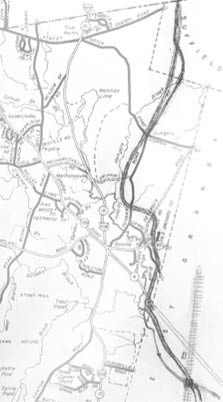
June 1, Friday. Ralph Miller and Bernard Rosewarne are making good progress on base-lines for preliminary survey for Relocation of Route 91 through the Springfield railroad yards. Al Cloutier thinks Francis J. Hoey may be the official District Engineer since his latest letters are signed that way. Ginny Atwater phoned that they do want the kitten. I looked for it in the hole in Herrick Road bank, but mother cat, Mamie had it out walking. I found it and put it in wellhouse. They came for it about 8:00 p.m. Daughter Pamela is delighted with the blue-eyed mite. Mosquitos are the worst ever. Baby has ten bites on his forehead.
June 2, Saturday. 7:00 to 8:30 Washed all small rugs with laundry. I got sneakers at Whit-inghams to take to Uncle Ralph for his birth-day. I arrived home at ten after stopping at store in Russell for groceries. Mr. and Mrs. Atwater came and took Baby with them to Huntington to get lamb chops for Elizabeth for Sunday’s din-ner. 12:30 p.m.I started mow-ing lawn. It was tall and difficult with push mower having been left over from last week. It needed lots of trimming. Finished mow-ing 5:30 p.m.Mamie is reconciled for loss of her kitten. Elizabeth phoned West Springfield. Pamela said kitten is lapping milk already. Gypsy moth caterpillars are everywhere in woods. Most of my men took Civil Service ex-ams today.
June 3, Sunday. Mrs. Riis was an interesting speaker at church. We didn’t bother with choir robes. After rehearsing next week’s music I took Hester to ride through Chester, Blandford and Russell getting home to E’s nice dinner by 11:45 a.m. I took Baby to ride in his cart, and he got out and walked on lawn north of schoolhouse. After we came back from brook E took him in stroller. I took bath in brook and sat in sun. Hester was able to chat with Baby. I took her to Westfield by 6:15 p.m.
June 4, Monday. Ralph Miller had to work for Ainsworth so couldn’t take Saturday’s ex-ams. I think Ainsworth purposely prevented him from taking it.
June 6, Wednesday. The windows of the Boston and Maine railroad station in Holyoke have been bricked up, and the building is used as a warehouse by a candy and tobacco com-pany. I worked in Agawam setting bounds with my survey parties.
June 7, Thursday. I saw biplane spraying woods for gypsy moths. Had several parties taking section in Granville gorge. I worked with men to make sure they didn’t take dangerous chances up on cliff. Our work checked. Previ-ous didn’t.
June 9, Saturday. I went to Westfield to get tire for car. Two dollar headlight also needed re-placing. I congratulated Sallyynn Barnes on her graduation. E took five Polaroid pictures of me, and I got two of Baby.
June 10, Sunday. Fred Hawley rehearsed with us after church for next week. Took Hes-ter riding through Ireland Street in South Worthington, Paryridge Road, down Kinn-ebrook to Middle Branch and home by noon/ I keep writing poems and short stories but haven’t sold anything lately. I am reading Vicki Baum’s Grand Hotel.
June 11. Monday. I spent till 12:20 in Green-field office. Gordon Ainsworth has fired John Dwyer. E rocked Baby from 7:45 to 9:45, and we got to sleep by ten.
June 12, Tuesday. Birds start chirping at 4:30 a.m. I got a recapped tire for $16.45. Baby went to sleep very nicely after playing ball in living room.
June 13, Wednesday. I loaned John Manzi $95 to get tires. When I play wth Baby he is very cute and clever about creeping afer ball.
June 14, Thursday. Al Cloutier is to be Traf-fic Engineer while Frank Weiss recuperates two months from having eye removed.
June 16, Saturday. Had Tiger Milk made with brewers yeast for protein. Hazel Griffin came to laundry while I was there. She says Springfield Gas Company has 21 engineers in three small rooms. When she graduated from Spring-field Tech High School in 1910 she went to work as a collector for A&P travel-ing on the trolleys, then for National Biscuit Company, in April 1926 till December she trained at Noble Hos-pital, then to present job at Gas Company. I made a concrete floor for the wellhouse, and took three baths in brook. Elizabeth’s father phoned. He wanted us to go with them to the Cape.
June 19, Tuesday. It was cloudy and hot with 95 degree temperature. I met Rita Muto whom I used to date after Arthur Murray’s studio Hal-loween party. She still lives at Maple Court but works for Dodge Reports.
June 21, Thursday. I overheard Al Graziano and John Manzi talking about girls and guys. So will consider carefully before introducing Rita to John.
June 22, Friday. With the end of the fiscal year approaching I am very busy at work.
June 23, Saturday. E’s father thinks I don’t like them because I was off hiking the last time they came. That had been my only chance to go for a hike that week. I did our laundry at the Glen by 8:15 p.m. Hester said matron Peterson tried to have a picnic for the old ladies, but it was a fiasco. E’s brother Shipley and family are coming to Wilbraham next week to stay with the Sturtevants over Fourth of July.
June 24, Sunday. I took E, H and baby on ride to Blandford before returning H to Westfield, 5:30 p.m. I have not yet finished mowing our lawn. Caroline Thornton had a clipping of my Grade Teacher poem from the Westfield paper
June 27, Wednesday. On way from Hamp-den I brought John Manzi home to Springfield/ I told him about Rita but not her last name. He doesn’t like the idea of a girl being older than he is. I had traveled 165 miles, made deliveries to resident engineers and visited four survey par-ties.
June 28, Thursday. Baby was up at 2:30 a.m. crying with teeth trouble, fever, and runny nose.
June 30, Saturday. 6:45 a.m. when I got to laundry, both Hazel Griffin and a lady who said she was from Woronoco were at the Glen. After starting my washers I left to get things from my car. When I returned both women were gone. However the Woronoco lady had left a small purse on the washers she used. Because she had been gone so few minutes I decided to try to find her and return the purse. Although I had no idea where she lived, I found her hanging out clothes to dry beside the last house west of store and post office. When I returned her purse she had so far not even missed it.


By Todd Shiveley
Growing up in the home of a veteran and a dedicated member of the Ransford W. Kellogg VFW Post 872 in Southwick, I learned early what patriotism, civic duty, and love of coun-try truly meant. My father served proudly, and my mother was equally committed through the Women’s Auxiliary. Like many children whose parents were involved in these organizations—as well as the Southwick American Legion Post 338—I saw firsthand how much these groups contributed to our community. Whether rais-ing funds for police or fire department vehicles, supporting local parades and carnivals, or pro-viding scholarships, their work was always rooted in volunteerism. Recognition, when it came, was simply a reflection of service already given. Years later, I followed in their footsteps and became a sworn member of the Southwick VFW Men’s Auxiliary on Point Grove Road.
By the time this July edition of Southwoods Magazine reaches mailboxes, Independence Day will have come and gone. My hope is that as we look ahead to America’s 250th birthday on July 4, 2026, our local churches will join the nationwide “Let Freedom Ring” effort. At ex-actly 2 p.m., bells across the country will ring thirteen times in honor of the original thirteen colonies. In Philadelphia, the Declaration of In-dependence will be read aloud, just as it was in 1776, and the Liberty Bell will symbolically join in spirit. Citizens everywhere are invited to par-ticipate by ringing their own bells, and perhaps even our fire department might add its voice to the moment.
Let freedom ring, and let us remember the countless rights and freedoms we are fortunate to enjoy.


Let Freedom Ring


June
1962


June 2015


Few documents have inspired the American peo-ple more than the Declara-tion of Independence. From phrases like “all men are cre-ated equal,” to “Life, Liberty and the pursuit of Happi-ness,” it is still remembered to this day, 250 years later. Thomas Jefferson drafted it, a committee reviewed it, and the Second Continental Congress, which was seated in Philadelphia, spent several days editing it before they formally adopted it on July 4, 1776. It should be noted that the only names on the original and early printings were those of John Hancock, as president of the Congress, and its secretary, Charles Thompson.
The Written Word
With no internet, cell phone coverage, social media, or live streaming, how did the written word get circulated? It all started immediately after its adoption. A handwritten copy was de-livered to John Dunlap, a Philadelphia printer. Working through the night, he and his assis-tants set the type and printed an estimated 200 single-sided “broadsides,” just under 16” by 20”, which could be easily read or tacked up on a wall. They were delivered to Congress the fol-lowing morning. Military commanders and co-lonial governments were then sent the official printing. Today, only two dozen or so copies of the “Dunlap Broadside” survive.
Newspapers began including copies of the Declaration in their publications. One needs to be mindful that the typical newspaper of the time was printed just once a week, so even if an editor received a copy, it could be another one or two weeks before it would be published. About 30 American newspapers reprinted it in the next couple of months. Some of the earliest newspaper publications included the following:
6 July, Philadelphia, The Pennsylvania Evening Post(first newspaper)
9 July, Philadelphia, Pennsylvanischer Staatsbote (first full German text)
10 July, Baltimore, The Maryland Journal, and Baltimore Advertiser (first publication by a woman, Mary Katherine Goddard)
10 July, New York, The Constitutional Gazette (first newspaper in New York)
12 July, New London, Conn., Connecticut Gazette (first newspaper in Ct.)
15 July, Hartford, The Connecticut Courant (first newspaper in Hartford)
17 July, Worcester, Thomas’s Massachusetts Spy (first newspaper in Mass.)
18 July, Boston, The New-England Chronicle and The Continental Journal (first newspapers in Boston)
Here in Massachusetts, the seat of the Ameri-can Revolution, the [Revolutionary] Council “Ordered That the Declaration of Independence be printed; and a Copy sent to the Ministers of each Parish, of every Denomination, within this State...” (July 16). Between having it printed in Salem, undoubtedly proofing the copy, order-ing and getting them delivered, it was early Au-gust before they were sent out.
The Spoken Word
The Declara-tion of Indepen-dence was not only intended to be read, but also to be spoken and listened to. It was first uttered in Philadelphia, and a few days later, on July 9, General George Washington had it publicly read to all of the troops stationed in New York City. There, it inspired a mob to tear down the lead statue of King George III sitting upon a horse, which was located in the cen-ter of the city on “Bowl-ing Green.” The noble statue was beheaded, chopped to pieces, cart-ed to Connecticut, melt-ed down, and converted into 42,088 musket balls! In Boston (July 18), Col. Thomas Crafts read the Declaration from the outside balcony of the Old State House. In many respects this was holy ground, for the crowd that gathered there stood in roughly the same spot where the Boston Massacre had oc-curred. Abigail Adams wrote to her husband, John Adams, the following:
“… great attention was given to every word. As soon as he ended, the cry from the Belcona, was God Save our Ameri-can States and then 3 cheers which rend-ed the air, the Bells rang, the privateers fired, the forts and Batteries, the cannon were discharged, the platoons followed and every face appeared joyfull… Thus ends royall Authority in this State and all the people shall say Amen.”
The official Massachusetts printing of the Dec-laration of Independence was only a portion of the previously mentioned Council decree. It also included that the ministers “… be required to read the same to their respective Congrega-tions, as soon as divine Service is ended, in the Afternoon, on the first Lord’s-Day after they shall have received it: — And after such Publi-cation thereof, to deliver the said Declaration to the Clerks of their several Towns, or Districts; who are hereby required to record the same in their respective Town, or District Books, there to remain as a perpetual Memorial thereof.” Both the Massachusetts Historical Society in Boston and the American Antiquarian Society in Worcester have copies of the official Massa-chusetts broadsides which were sent out to ev-ery minister in the state.
We don’t know if Southwick’s Rev. Abel For-ward read it on Sunday, August 11, 1776, but we presume so. In Westfield, the town was between ministers, due to the death of Rev. John Ballantine earlier that year, so there is no known record. In Longmeadow, the Rev. Ste-phen Williams wrote in his diary for August 11, “Sabbath—this day, I read publicly (being required thereto by the provincial councill) the Declaration (of ye continental congress) for in-dependency …” Newspapers and other sources document the public reading from the pulpit in Worcester, Boston, as well as the small town of Charlton in central Massachusetts. At least five towns (Ipswich, Mendon, Upton, Bedford, & Woburn) still have their printed or manuscript copies.
Today
Some of the vocabulary is out of date. Refer-ring to the indigenous people as “merciless In-dian Savages” is extremely offensive. Putting off until the Civil War and the Thirteenth Amend-ment the issue of slavery condemned millions of men and women to chattel slavery. Despite these flaws, the Declaration of Independence is still an inspired national document. Different organizations and museums publicly read the Declaration of Independence on the Fourth of July, with some even inviting attendees to sign a copy of the document. In actuality, the official parchment copy Declaration wasn’t publicly signed until August 2.
In keeping with that history, the Southwick Historical Society is having a public reading and signing of the Declaration of Independence on Sunday, August 2, 2026, at 2:00 p.m. at the Southwick Congregational Church, with light refreshments to follow, and all members of the community are warmly invited to attend.
THE DECLARATION OF
INDEPENDENCE

By Lee David Hamberg


Official Massachusetts Broadside


Rev. Steven Williams of Longmeadow
Col. Thomas Crafts


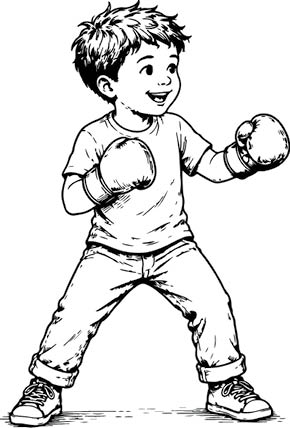
I want to talk with you about having the heart of a champion, because I want you to stand strong, rise tall, and get back up every time life knocks you down. Too many people give up the moment things stop going their way, but a champion is more determined than that. Your attitude should be: I may have been knocked down, but I’m not staying down. I’m going to stand firm and work my way through whatever I’m facing.
I’m reminded of a little boy who wanted a punching bag for Christmas. His parents bought him one of those inflatable ones with a clown face. He circled it, ready to unleash a mighty punch, and when he hit it, the clown fell back and bounced right back up. He hit it again, and again it popped back up. Finally, he turned to his mother and said, “I can knock it down, but I can’t keep it down. I guess it’s standing up on the inside.” That’s what I want for you—to be standing up on the inside.
When life knocks you down, get back up. Don’t give up. Keep standing, keep praying, and keep believing. One translation of the Bible says, “Don’t cast away your confidence, for payday is coming.” I like that. Payday is coming. May-be things look difficult right now. Maybe you’re work-ing hard and nothing seems to change. Tell yourself that even if the moment is hard, something good is on the way.
I once spoke with a man who had just lost a high-level job. I expected him to be discouraged, but instead he said, “I can’t wait to see what God has in store for me next.” That’s standing up on the inside. When you’ve done all you can do, that’s when God steps in and does what you can’t.
In the New Testament, Paul and Silas under-stood this well. They were teaching and help-ing people, but some leaders didn’t approve. They were falsely accused, arrested, beaten, and thrown into prison. Yet they didn’t complain or blame God. In the darkness of that dungeon, they sang praises. They stood strong on the in-side. And at midnight, while they were singing, a great earthquake shook the prison, the doors flew open, and their chains fell off. Circum-stances can change suddenly when you refuse to give up.
Don’t back down. I once heard about a family with a big German shepherd named Scooter. He was strong, fast, and the king of the neighbor-hood. One day, a tiny Chihuahua came racing toward him, barking with all its might. You’d think Scooter would stand his ground, but in-stead he lowered his head, lay down, and rolled over with all four legs in the air. He looked fierce on the outside, but he wasn’t strong on the inside.
Too often, we do the same thing when trou-ble comes barking. We back down and let the loudest voice take control. It’s time to stand up on the inside and tap into God’s strength. Keep fighting the good fight of faith. No matter how many times you get knocked down, get back up. God sees your determination and your resolve. When you stand strong, you show the heart of a champion.

Today, it is easy to drive through Granby, Con-necticut, without real-izing that an ambitious 19th-century canal once cut through its fields, for-ests, and villages—link-ing this quiet corner of the state to regional and even global commerce. Long before railroads and highways reshaped transportation, the New Haven & Northampton Canal, known locally as the Farmington Canal, represented a bold effort to move goods and people across New England. Though it operated for only a short time, the canal left a lasting im-print on Granby’s landscape, with traces still ly-ing beneath familiar roads and trails.
The canal’s story in Granby began with op-timism and celebration. On July 4, 1825, the groundbreaking for the entire project was held in town, beginning at the First Congregational Church Meeting House in North Granby. To-day, only a small plaque in a cornfield marks the spot, but in 1825 thousands gathered along-side prominent leaders, including Connecticut Governor Oliver Wolcott Jr. and canal presi-dent James Hillhouse. A festive procession fol-lowed, led by a canal boat mounted on wheels and pulled by six horses. The parade traveled north to the ponds at the Massachusetts border, now known as Congamond Ponds, where the first ceremonial digging took place. Ocean water was poured into the excavation to symbolize the canal’s intended connection to the sea. The cel-ebration ended in Salmon Brook village with a large public dinner, marking the hopeful begin-ning of a project that promised to transform the region.
Construction in Granby focused on the ca-nal’s “summit level,” an elevated stretch that required careful engineering and a dependable water supply. Initial contracts in 1825 covered the first five miles south from the Massachusetts line to Salmon Brook, a section that required multiple timber-and-stone locks and plans for lock houses. One of the greatest challenges was crossing Salmon Brook. Early attempts to carry the canal over the waterway using embank-ments and culverts were repeatedly destroyed by flooding.
Major washouts in 1826 and 1828 forced en-gineers to redesign the crossing, and only after a substantial stone arch culvert was completed in 1829 could this section function properly. Wa-ter supply also proved difficult. The summit level depended heavily on the Congam-ond Ponds, and a severe drought in 1830 dropped water levels so low that navigation between Granby and Southwick halted for months. Engineers eventually con-structed an additional feeder channel to divert water from Salmon Brook into the ponds, stabi-lizing operations.
By the late 1820s, canal traffic brought new energy to Granby. Boats transported agricultur-al goods, timber, and manufactured items, con-necting local farmers and merchants to larger markets. In October 1829, a canal boat known as the Sachem, operated by a Granby captain, successfully trav-eled the full route from the Massachusetts line to New Haven Har-bor, demonstrating the canal’s promise. Excur-sion trips soon followed, drawing curious pas-sengers eager to experience this new mode of travel. Granby became a notable stop along the route, with local apples and other goods reach-ing distant markets and activity around locks, crossings, and taverns bringing people together.
Despite its promise, the canal was difficult to maintain. Floods repeatedly damaged infra-structure, droughts reduced water levels, and each winter brought a complete standstill as the canal froze. Meanwhile, railroads advanced rapidly, offering faster and more reliable trans-portation. By the late 1840s, canal operations declined sharply, and the system was gradually abandoned as rail lines expanded through the region.
Although the canal operated for only a few decades, its impact on Granby was significant. Subtle depressions, stone remnants, and histor-ic maps still reveal its path. The Salmon Brook Historical Society, working with the Town of Granby, recently installed interpretive signs at key canal crossings, including Hungary Road and Petersen Road. Installed in May 2026, these markers help residents and visitors better imag-ine the waterway that once carried Granby to the world.
Think of someone who has made a meaning-ful difference in your life. What people come to mind? For me, one of those people is Mr. Dan Cook. A family friend since long before I was born, Dan has always been a steady source of encouragement. As I navigated through my aca-demics and extracurriculars here in Southwick, I knew I could count on him for support. I have also had the privilege of working with him on projects for the Southwick Agricultural Com-mission, where I saw firsthand his dedication to strengthening the community through hands-on service. Dan’s good heart and strong char-acter make him an essential part of the place we call home.
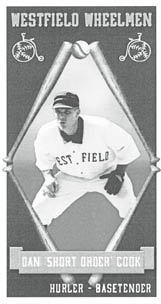
When Dan isn’t fighting for his community, he dons his baseball gear and becomes “Short Order,” a longtime player for the Westfield Wheelmen. Originally founded in 1886 and re-vived in 2006 by Dan “Gunner” Genovese, the Westfield Wheelmen Vintage Base Ball Club preserves the spirit of early baseball.
Classic uniforms and equipment as well as rules origi-nating from the nineteenth cen-tury offer fans a glimpse into the game’s earliest days. Watching the Wheelmen play is a fun way to experience a living lesson in American history!
Dan’s path to becoming one of the Wheel-men’s most recognizable players began in 1969, when his family moved to Hilltop Farm in Suffield, Connecticut. His father worked there as a herdsman and breeder of Holstein show cows, and his long working hours at the farm meant Dan and his brother Todd spent their summers down the road with the Sweeny fam-ily instead. Alongside Jeff, Greg, and Francis Sweeny, they learned the basics of baseball in the backyard. When their father realized how much they enjoyed the game, he eagerly bought them all the gear they would need to play the game properly.
From then on, Dan and Todd practiced ev-ery night after chores, with their father pitching and teaching them the rules while the brothers played against one another with invisible run-ners. By the spring of 1973, eight year old Dan was ready for organized play, and his father signed him up for a youth baseball team. Dan spent the next few years learning teamwork and sportsmanship, guided by his first coach, Mr. Joe Osowiecki, whose kindness left a lasting im-pression and taught him the value of dedication to community.
Things changed rapidly for Dan and his base-ball career over his younger years. In the 10–12 league in Suffield, he played under Coach Sulli-van, one of the first coaches in the nation to win 300 games in soccer, basketball, and baseball for one high school, Winsor Locks High. Coach Sul-livan and Assistant Coach
Lancioni were immensely passionate, shar-ing stories of real games to help the team un-derstand the sport more deeply.
After the 1977 season, Dan’s father sold his herd of cows at Hilltop Farm and moved the family to Southwick, where Dan joined the 13–15 league in 1978. His team, the Mets, won the championship in his first year thanks in part to Coach Kenny Billings, whose intimidating de-meanor pushed the players to excel. After two more years, Dan later joined the Southwick Rams in high school, playing under Coaches Bob Lawless and Jim Vincent. The team never lost more than three games in a season and won the Western Mass title in 1982.
At the top of his game, Dan graduated high school, enlisted in the Army, and was stationed in Germany. He thought that this was the end of his baseball career, but in the spring of 1984, his staff sergeant spread the word about an Army softball team. Dan played for two years before returning home in 1986, where he briefly joined both the Suffield softball league and a team in the Southwick softball league founded by Mike Molta. His softball career continued to flourish; in the 1990s, he played for a team called the Co-conuts with his brother Todd, traveling to the World Series in Orlando four years in a row. In 2002, he formed the James Gang, named in honor of his late stepfather, Jim Miles, who re-cently passed away. The team won its first tour-nament, placed fourth in the National league, and became the top New England team in its division. Dan later joined what he considers the best softball team of his career in Enfield, Con-necticut, where they won nine straight champi-onships between 2005 and 2013 and even com-pleted an undefeated season.
During this time, Dan’s con-nection to vintage baseball be-gan. In 2006, his friend Steve Wingate approached him and Todd about joining a newly revived Westfield Wheelmen team. Baseball Hall-of-Farner Dan Genovese planned on re-founding the team with the intention of following the rules of baseball as they were written in 1886. Intrigued by this idea, Dan and Todd joined a roster of talented players. The team quickly found success, reaching the Vintage Base Ball World Series in 2007 and 2008 as well as win-ning six consecutive Rabbit Maranville tourna-ments in Springfield.
Dan’s most impactful contribution to the Wheelmen came when he returned to Hilltop Farm, the place where he first learned to play. During a 2018 fundraiser, he met Ray Pioggia of the Friends of the Farm at Hilltop (FOFAH), who was eager to learn about the farm’s histo-ry. Over the next few years, Dan shared photos and stories about the show cows his father once raised there. By 2022, the Wheelmen were strug-gling to find a field due to the lingering effects of COVID, which prompted Dan to ask the FO-FAH Board of Directors if the team could use Hilltop Farm as their home field. In gratitude for his help preserving the farm’s history, they agreed. Since then, Hilltop Farm has hosted multiple vintage baseball tournaments featur-ing teams from across New England, New York, and even Michigan.
This season marks Dan’s fifty third consecu-tive year of organized baseball or softball. After joining the Wheelmen in 2006, he helped secure a home field at the very place where his love for the game began. In addition, he has played with current and past Wheelmen players including “Bubba” Rudolph, “Gunner” Genovese, “Jersey Joe” Hepworth, “Mustang” Carrier, “Dude” Leverock, “Mighty Joe” Young, “Magoo” Lan-cioni, “Big Country”, “Stilts” Flaherty, “Rusty” Leverock, “Cap Gun” Orzechowski, “Pistol Pete” Orzechowski, “Smookie” O’Connell, “Silky” Och, “Andale” Conde, Mickey Garcia, “Choe Time” Choe, “Kutcher” Ashton, “Siz-zler” Wingate, “Gator” Dumont, “Weezer” Winiarski, “Bulldog” Stewart, “Matches” Av-ery, “Asa Spades,” and “Hilltop” Cerra. Dan’s lifelong experience has made him a skilled and respected player, and his generosity has created a space where people can gather to enjoy base-ball in its purest form.
If Dan’s story inspires you, please consider attending the Westfield Wheelmen’s vintage baseball tournament at Hilltop Farm this June 20th and 21st. As they celebrate their twentieth season since their re-founding, they will wel-come teams from near and far for a spectacular vintage baseball festival. Admission is just $5 per car, making it a wonderful opportunity to enjoy America’s pastime right here at home!


Heart and History
How baseball shaped a life.
By Lucas Caron, adapted from Dan Cook




Heart of
a Champion




Where the Canal Once Ran
By Dave Roberts,
Exec Dir SBHS


Canal Sign Marker
Map of the Canal Route
Old Lock House [Freight House]
It started the way most questionable deci-sions do—with optimism. Not reckless opti-mism or blind optimism, but the simple belief that if someone claims the best fried chicken in the country is in New Orleans, then the only reasonable thing to do is go find out for our-selves. Somewhere between a Diners, Drive-Ins and Dives segment praising Willie Mae’s Scotch House and a late-night conversation about road trips, the idea stopped being an idea and quietly turned into a plan. Before long, three motorcy-cles, thirty-five hundred miles, and one mission were set in motion.
At five in the morning, the bikes fired up. Dogs barked. Neighbors woke up whether they wanted to or not. We waved, and they waved back, though it was hard to tell whether it was encouragement or a plea for silence. We cut through the mountains, slid past Barkhamsted Reservoir, dropped onto Route 8 toward 84, and aimed west. The roads were dry, and the sun cut through the morning haze as if it approved of what we were doing. One hundred and sixty miles later, we were eating breakfast in Pennsyl-vania, feeling like seasoned interstate veterans.
Pennsylvania offered long mountain passes and smooth riding, the kind of country where you can move right along at the posted speed limit—or close enough to honor its spirit. By nightfall, we reached New Market, Virginia, tired but still convinced we were on the right kind of adventure. The next morning brought dark clouds, and another biker standing nearby looked at the sky and said it would have been the best day of his life if he had joined the Win-nebago club instead. His timing was perfect, be-cause we rode two hundred miles of dry pave-ment followed by four hundred miles of steady downpour. One tractor trailer driver decided I wasn’t wet enough and splashed me so hard I thought I was surfing in Maui.
Nashville arrived just in time for the sun to fry every patch of skin where the sunscreen had washed away. Then came the Natchez Trace, a 444-mile stretch of scenic highway through Ten-nessee, Alabama, and Mississippi. There were no stoplights and no interruptions, just trees, rolling hills, deer, turkeys, and the occasional armadillo daring us to blink first. The landscape slowly changed as New England trees gave way to Spanish moss hanging from branches like something out of another century. We crossed the Tennessee River, a view too dramatic not to photograph, and then the rain returned with a vengeance.
Three soaked riders sloshed across another hotel lobby while rain hammered the roof so hard it collapsed a nearby building. So much for the sunny South. Eventually, we rolled toward New Orleans, and the ride in was something I will never forget. Three lanes of traffic, no break-down lane, water on both sides, and a black cloud rolling in like someone had flipped off the lights. Thunder cracked, lightning flashed, and rain hit my face like a fire hose. Seventy-five miles an hour turned into crawling. I caught the taillights of a Chevy S-10 pickup and followed them like they were guiding ships through fog.
When we finally reached the city, we headed for the Hyatt Regency, having been told it was the place to stay. Except it hadn’t reopened since Katrina. Windows were blown out, broken glass still visible in places, and grass grew through cracks in the pavement as if nature had begun reclaiming it. The building stood quiet and hol-low, a reminder that storms do not simply pass and disappear. We sat there for a moment taking it in before rerouting to Canal Street and check-ing into the Marriott, dripping across polished marble floors like we were part of the décor.
Bourbon Street did what Bourbon Street does. There was an Irish pub, a voodoo shop, Mar-garitaville, and The Funky Pirate. Somewhere in the early hours, I took a taxi back to the hotel, which was only about a thousand feet away. A kid whistled, a cousin appeared, and I was de-livered safely. Not long after, Paul required the same highly specialized transportation service. Same kid, same whistle, same cousin, another successful delivery. That left Spud, who stepped outside, looked around, realized there was no taxi brigade waiting for him, had one last cock-tail at the bar, and eventually showed up at the room just to make sure we were still alive.
Morning came slow, and we geared up to com-plete the mission. The rain had finally stopped, and the sun broke through, so we pulled over, took off the rain gear, and got back on the road. It was the wrong move. Spud was riding behind us when his wet rain gear somehow got caught in the rear wheel of his motorcycle while he was doing about seventy-five miles an hour. The bike bucked and whipped around as the gear wrapped itself tighter into the spokes. Thank God it was the cheap stuff. At first, Paul and I kept going, thinking Spud had simply dropped back in traffic. Then we realized he wasn’t be-hind us anymore, and that will wake you up in a hurry.
We pulled off under the first overpass and waited. A few minutes later, Spud rolled in with pieces of shredded rain gear hanging off the bike like he had fought a lawn mower and survived. He shut off the bike, climbed off, looked at the mess, and immediately began lecturing us about abandonment, loyalty, and exactly how long friends should wait before assuming another friend had become part of the Louisiana high-way system. Once the lecture ended, we were back on the road toward New Orleans.
Finding Willie Mae’s turned out to be harder than riding through lightning. We had the ad-dress, and the GPS insisted we were there, but the street simply stopped. A park cut straight through it. We circled twice, Louisiana humid-ity wrapping around us like wet canvas. Paul finally shut off his bike and said we had tried and should just go home. We were seventeen hundred miles from Southwick, and we were going to turn around without chicken because of a park. Spud looked at the grass and trees block-ing the road and asked if we had really ridden that far just to be taken out by shrubbery.
That was when we saw an older Black gentle-man riding by on a bicycle. We asked him where Willie Mae’s was, and he slowed, nodded, and explained that the park cut the street and we needed to go two blocks over, turn left, then back right. Simple, calm, and certain. We followed his directions, and there it was—an old wooden house rebuilt after Katrina. If you slammed the front door, the whole building shook. We sat down, and the chicken arrived golden, crisp, and perfect. Nobody spoke at first. Paul took a bite, chewed slowly, and said we could go home now. Spud leaned back and declared it worth it, though he planned to fly next time.
While we were there, we met Willie Mae’s granddaughter, who was running the restau-rant. We told her how far we had ridden just to try the chicken. She smiled and talked with us like it was the most normal thing in the world. There was pride in her voice and history in the walls, and sitting there, it didn’t feel like a televi-sion destination anymore. It felt real.
We rode north after that—Tuscaloosa and tor-nado sirens, the Tail of the Dragon’s 318 curves in eleven miles, Smoky Mountain fog, and Blue Ridge rain. Eleven states and thirty-five hundred miles by the time we were done. Somewhere on the ride home, I kept thinking about what we had seen: mountains rising out of Pennsylvania, the Tennessee and Mississippi Rivers stretch-ing wide and steady, bayou country draped in Spanish moss, a storm-scarred hotel in New Or-leans, a man on a bicycle who took a minute to help three strangers, and a granddaughter car-rying on her family’s legacy one plate at a time.
We didn’t see all of America. We saw a ribbon of it, a narrow strip of pavement cutting through farms, cities, rivers, and hills. But it was enough to remind me how vast it is, how beautiful it is, and how resilient it is. This country isn’t just headlines and arguments. It is back roads and bridges, people who point you in the right direc-tion, and families who rebuild after storms and keep the lights on. Riding through it—soaked, sunburned, and exhausted—I felt something steady. Pride. Pride in the land, pride in the free-dom to ride it, and pride in calling it home. After thirty-five hundred miles of open road, I didn’t just feel lucky. I felt grateful and was glad to be an American.


1500 Miles to the Best Chicken
by Bob Fox




When Susanna and I drive up to the Summit House on the mountain in Hadley, our eyes always fill with wonder. Standing on the west side of the porch, we look out over the rich farmland below, wait-ing for planting and ready to produce another season of vegetables and fruit.
The success of those crops begins with the Pioneer Valley’s remarkable soil. Its fertile loam was shaped by glacial outwash and ancient lake sediments, creating well-drained, nutrient-rich ground that has supported agriculture for gen-erations. The valley’s gentle slopes guide water toward the central riverway, allowing sediments to settle and build the productive farmland we know today.
Western Massachusetts is also blessed with diverse bedrock, including the volcanic basalts of the Metacomet Range and Mount Tom, which weather into soils rich in magnesium, iron, and traces of calcium. These near-neutral soils support an impressive variety of plant life, and the Connecticut River continues to replen-ish them with silts and clays during seasonal flooding.
Traveling south, the farmland of the Connect-icut Valley comes into view, its dark soil perfect for growing some of the finest tobacco leaves in the country. There was a time when I enjoyed Rosedale cigars, grown right here in the valley. They were expensive in stores, but a former stu-dent of mine, who became a vice president of a major cigar company, kindly allowed me to purchase them at wholesale prices. I felt like a frontier mountain man, buying top-quality ci-gars at the local trading post.
Most of us, though, tend our own small gar-dens at home, where the rule is simple: fertil-ize with compost. Compost enriches the soil’s physical, chemical, and biological properties, feeding plants with nutrients and beneficial or-ganisms such as bacteria, protozoa, nematodes, and fungi. Susanna and I keep a large dark bar-rel filled with banana peels, orange rinds, coffee grounds, eggshells, leaves, and grass clippings. We turn it regularly throughout the season, and nature transforms it into rich, productive com-post.
When it comes to mulch, however, too much of a good thing can cause problems. A heavy layer can prevent water from reaching the soil and reduce air circulation, smothering the roots it was meant to protect.
Hadley is known for its exceptional aspara-gus, and its soil nourishes the crop much like a mother feeding her child with the best nature can offer. That same idea of nourishment leads us to the deeper meaning of planting in good soil.
Life can feel a lot like a garden facing unpre-dictable weather. Some seasons bring gentle rain and steady growth, while others test us with heavy winds, sudden downpours, or long stretches of drought. Plants respond in different ways—some bend without breaking, some send their roots deeper in search of strength, and some hold fast because they were planted in soil rich enough to sustain them. Our lives work the same way. Challenges may push us, stretch us, or slow our growth, but when our roots are set in good soil, we remain steady. Find faith in the soil that you have been given, the source that nourishes, steadies, and strengthens us when conditions around us change.
Wherever you are planted in life, the soil be-neath your feet is rich with possibility. Use it wisely. Your family and community are waiting for the harvest only you can provide. They are hungry for the gifts you were uniquely given. Be committed, and let those gifts grow.
There are moments in a child’s life that are easy to interpret from the outside. A child hesitates, avoids, pushes back, or shuts down. Sometimes it happens quickly, and sometimes it builds slowly, and from the outside it can look like resistance. Yet on the in-side, those same moments can feel very differ-ent. A simple request may feel overwhelming before it even begins. A transition that seems manageable may feel rushed or confusing. Even a familiar task can suddenly feel harder than expected—not because the child doesn’t under-stand it, but because something about the mo-ment feels like too much.
Many children and teens are aware of what is expected of them. They know what they should be doing, and often they are trying to keep up even when it is difficult. That effort isn’t always visible. It can show up in small ways, such as pausing longer than usual, avoiding something they typically do, or needing more time to get started. From the outside, these moments can look like hesitation. From the inside, they can feel like pressure.
Sometimes it isn’t one moment that creates a reaction—it’s many. A series of expectations, a shift in routine, or a demand that comes too quickly can build on one another. Each piece on its own might seem manageable, but together they can become overwhelming. When that happens, the response we see is often the point where everything finally becomes visible.
Children don’t always have the words to ex-plain what’s happening inside. They may not say that something feels overwhelming or that they need more time to process. Instead, they re-spond in the only way they can in that moment, and those responses don’t always match what they are experiencing. What we see might look like avoidance, frustration, shutdown, or resis-tance. But underneath those reactions, there is often uncertainty, pressure, difficulty shifting gears, or simply feeling overwhelmed.
When we begin to look at these moments from the inside out, the picture starts to change. The behavior doesn’t disappear, but it begins to make more sense. If a child reacts in ways that feel confusing or out of proportion, it can help to pause and consider what the moment might feel like for them. Not to assume and not to ex-cuse, but to understand. Sometimes the most meaningful change begins when we stop focus-ing only on what we see and start becoming curious about what might be happening under-neath.


10-5


By Michael Dubilo


Not What it Seems
Dr Simone Phillips, Psychologist
Inside the Young Mind:


To include your event, please send information by the 1st of the month. We will print as many listings as space allows. Our usual publication date is around the 10th of the month. Email to: magazine@southwoods.info.
Tolland Cultural Council
Oakland Stroke
Sunday, August 16, 4:00 pm - Rain date August 30Tolland Town Green Oakland Stroke is a 13-piece band featuring the Bump City Horns and leading lady Donna-Lee DePrille on vocals. This program is supported in part by a grant from the Tolland Cultural Council, a local agency which is supported by the Mass Cultural Council, a state agency. The perfect thing to do today!Mark your calendar.
Stanley Park
Upcoming Events
• SUNDAY night concert series - 7 bridges road band on June 21st. This performance begins at 6:00 p.m. at the Beveridge Pavilion and has a suggested donation of $5 per person. Chairs will be provided and food service will be available from The Bubble Mug Cafe at Pottery Cellar.
• Accessible Bird Walk in the Gardens with Martha Kane. Sunday, June 20, 2026, 9AM-11AM. The workshop will meet at the restrooms near the Woodland Wildflower Garden (park in big parking area near the Carillon Tower). Nature workshops are free of charge.
• T’ai Chi Chih - We are pleased to offer four additional classes in 2026! Join us Wednesday mornings from 9:30 a.m. to 10:30 a.m. on July 22, July 29, August 5, and August 12. Participants are welcome to park at the Pavilion Annex via Gate 4 off Kensington Avenue. Donations to the Park of $5 per person, per class, is suggested.
• The Carillon concert will be presented on Sunday, June 21st from 1:30 pm to 2:30 pm. Stanley Park’s Carilloneur will offer a variety of music from the Carillon Tower. Find a park bench, sit and enjoy the music as it drifts through the Park.
For further information please go to www.stanleypark.org or call the park office at 413-568-9312.

Southwick Historical Society, Inc
Reading the Declaration of Independence
Sunday, Aug. 2nd - The Southwick Historical Society Inc. will host a reading and signing of the Declaration of Independence in celebration of the 250th Anniversary of America on Sunday, August 2, 2026, at 2:00 p.m. at Southwick Congregational Church, 488 College Highway. August 2, 1776 was the day the official parchment of the Declaration of Independence was signed. After the public reading, guests are welcome to add their signatures to the document. There will also be a display featuring some of the men from Southwick who fought for freedom. Refreshments will be provided by church members after the reading.
Comark Reunion Picnic
Save the Date Sat, July 18th ~ 3:00pm 7:00pm - Come join us and reconnect with any of our former employees who spent time at Comark over the years. The Pavilion at Whalley Park has been reserved so there will be plenty of shade. Please bring your own chairs.We decided the menu would be Pot Luck so please bring one of your favorite dishes to share. There are no grills but there is electricity to plug in crock pots. Also bring your own non/alcoholic drinks. Cost is $5 per family to help cover costs.Help spread the word to anyone you might be in touch with that isn’t on Facebook. Contact Marlene 413-348-0601.
Southwick Congregational Church
Strawberry Supper
Sunday, August 16, 4:00 pm -The Southwick Congregational Church, 488 College Highway, Southwick, MA will be having their Annual Strawberry Supper, this year on FRIDAY, June 19th at 6:00 PM. Carry Out available between 4:45 & 5:30. Dinner will include Ham, baked beans, coleslaw, potato salad, pea salad, corn muffins and strawberry shortcake. Cost is $22 for adults and $10 for children age 5-10, children 4 and under are free. If you are interested, please call or email the church office to reserve your seat. Office hours are Tue, Wed, Thu from 9:30-4:00, phone, 413-569-6362, email SouthwickUCC@gmail.com.


COUNTRY PEDDLER
CLASSIFIEDS


PRAYER OFFERINGS
DELREO HOME IMPROVEMENT for all your exterior home improvement needs, ROOFING, SIDING, WINDOWS, DOORS, DECKS & GUTTERS extensive references, fully licensed & insured in MA & CT. Call Gary Delcamp 413-569-3733
RECORDS WANTED BY COLLECTOR - Rock & Roll, Country, Jazz of the 50’s and 60’s All speeds. Sorry - no classical, showtunes, polkas or pop. Fair prices paid. No quantity too small or too large. Gerry 860-402-6834 or G.Crane@cox.net
GOODS & SERVICES
Lakeside Property management - For all your landscaping needs. Mowing, new lawn installs, sod, mulch/stone installation, bush trimming, retaining walls, snow plowing/removal, etc. Serving Southwick, Suffield, Granby, Agawam, Westfield, Simsbury. Residential and commercial. Call Joe 413-885-8376. Give us a to get that property looking the way you want it! Now accepting major credit cards.
The granby motel- 551 Salmon Brook Street Granby, CT 06035. Room for rent, weekly, daily, & monthly. Wifi available. Stove, Refrigerator, Kitchen. LONG TERM RENTAL AVAILABLE AT AFFORDABLE PRICE. Ask for Mike Shaw. 860-653-2553
St. Jude’s Novena - May the sacred heart of Jesus be adored, glorified, loved and preserved throughout the world now, and forever. Sacred Heart of Jesus pray for us. St. Jude, Worker of Miracles, pray for us. St. Jude, Helper of the Hopeless, pray for us. Say this prayer 9 times a day. By the 8th day your prayer will be answered. It has never been known to fail. Publication must be promised. Thank you St. Jude. ..- GR





JUNK REMOVAL SERVICE Local dump runs, furniture removal, debris removal, garage cleanouts, house cleanouts, and more. Discounted bulk pickup from driveway or garage. 24/7 Same-day service available. Free Estimates. Call, or text pictures to 860-698-1848. WWW.KBJUNK.COM KB JUNK REMOVAL LLC
GOODS & SERVICES

FOR SALE: Aerosonic Upright Piano. Good Shape, needs tuning. Pickup Only. $200.00. Call Grace 413-569-5453
PRAYER OFFERINGS
St. Jude’s Novena - May the sacred heart of Jesus be adored, glorified, loved and preserved throughout the world now, and forever. Sacred Heart of Jesus pray for us. St. Jude, Worker of Miracles, pray for us. St. Jude, Helper of the Hopeless, pray for us. Say this prayer 9 times a day. By the 8th day your prayer will be answered. It has never been known to fail. Publication must be promised. Thank you St. Jude. ..- RMG